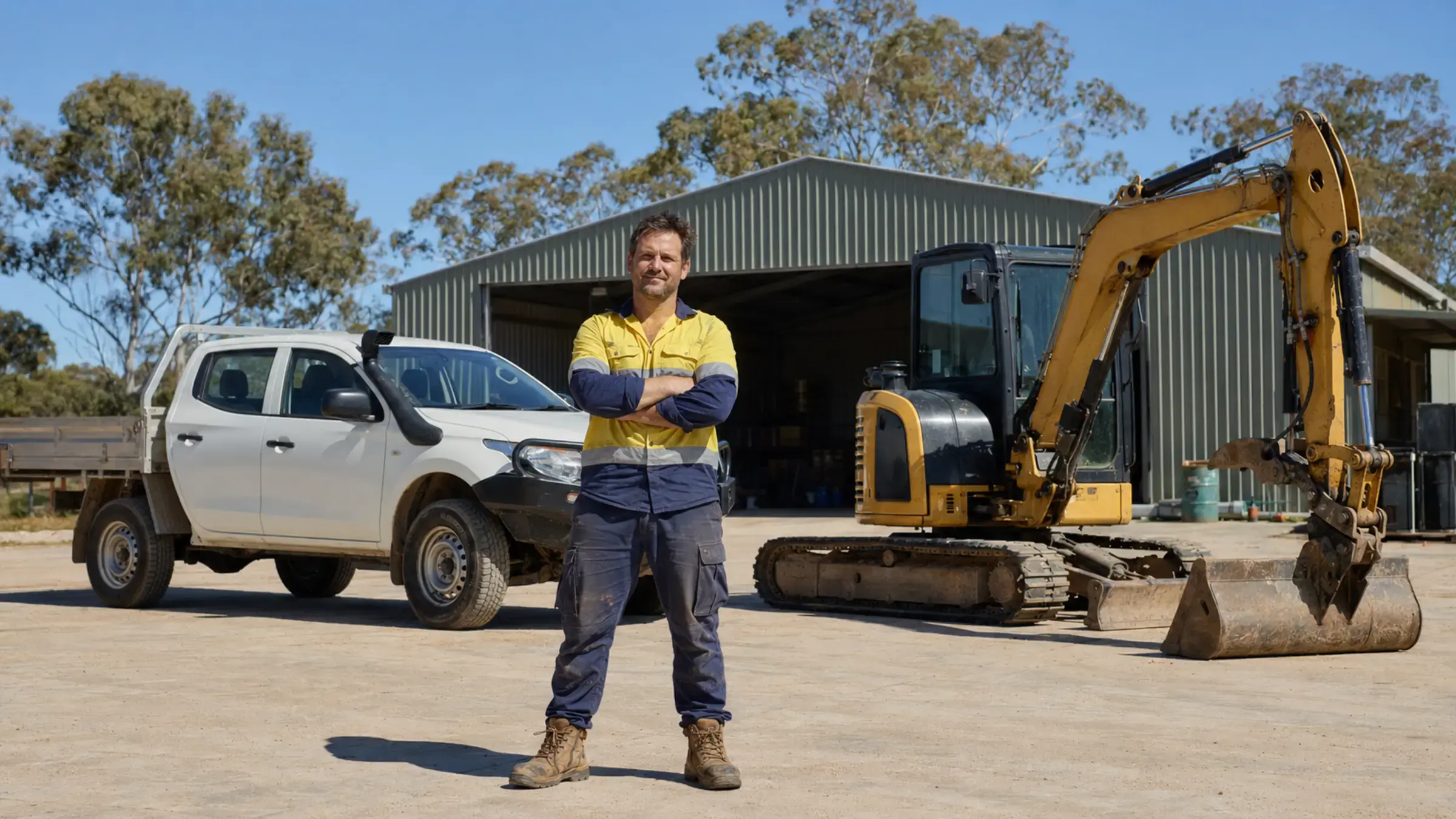

Getting an ABN takes 10 minutes online. Getting approved for equipment finance takes a lot more than that. Lenders look at your full financial profile, and most ABN holders do not realise how many boxes they need to tick before they can access the finance they need.
Equifund works with operators every week who have an ABN, a clear need for equipment, and a solid business behind them, but who get knocked back or stalled because of avoidable issues. Short trading records, no GST registration, overdrawn bank accounts, late BAS lodgements, messy personal credit. Every one of these is fixable. The key is fixing them before you apply, not after.
Here is what lenders actually assess, and what you can do right now to put yourself in the best possible position.
1. Register for GST: Even If You Are Under the $75,000 Threshold
GST registration is mandatory once your turnover hits $75,000 per year. Below that threshold, it is voluntary. But voluntary does not mean optional if you are planning to apply for equipment finance.
Here is why lenders care: GST registration means BAS lodgements, and BAS lodgements give lenders a verifiable record of your trading history and turnover. Without GST registration, you have no BAS history. No BAS history is one of the most common reasons low doc applications are declined. Lenders cannot verify what they cannot see.
Registering voluntarily also lets you claim input tax credits on business purchases, including the GST component on financed equipment. That is money back in your pocket on top of the finance benefit.
You can register at ato.gov.au or through your tax agent. It takes one business day to process.
2. Keep Your BAS Lodgements Current and Consistent
Late or missing BAS lodgements are the single most common reason equipment finance applications stall. This is not a close second. It is the number one issue we see.
Lenders use BAS records from the ATO portal to verify your turnover. Gaps in your lodgement history look like gaps in your trading, even if you were flat out. A quarter with no BAS looks the same as a quarter with no income.
Quarterly lodgement is standard for most businesses. Keep them on time, every quarter. If you have overdue BAS lodgements sitting in the queue, lodge them now. Even late lodgement is better than no lodgement. Lenders can work with a late BAS. They cannot work with one that does not exist.
3. Keep Your ABN Active and Show Consistent Trading
ABN age milestones matter more than most applicants realise. Six months, 12 months, and 24 months each unlock different lenders and better rates. The longer your ABN has been active and trading, the stronger your position.
A dormant ABN, registered but not actively trading, is almost impossible to finance against. Lenders need to see consistent revenue, not just registration. An ABN number on its own tells them nothing.
One important point: do not cancel and re-register your ABN if you go through a slow period. Keep it active. The clock resets the moment you cancel, and you lose all the ABN age you have built up. A short slowdown in revenue is far easier to explain than starting back at day one.
4. Separate Your Business and Personal Bank Accounts
Lenders review six months of bank statements as part of their assessment. If your business income and personal expenses run through the same account, it is very difficult to show a clear picture of your trading performance. Everything blurs together.
Open a dedicated business bank account and run all business income and expenses through it. This one step alone makes your application significantly easier to assess. It also makes your own bookkeeping a lot cleaner.
When reviewing bank statements, lenders look for regular deposits that align with your BAS turnover, consistent outflows, and no dishonours or overdrawn periods. Dishonours and overdrafts are red flags that suggest financial pressure, regardless of how strong your revenue looks on paper.
5. Watch Your Personal Credit File
For sole traders and many small company directors, lenders check the director's personal credit file alongside the business profile. This catches a lot of applicants off guard. They think their business and personal finances are separate. For credit assessment purposes, they are often not.
Defaults, court judgements, and patterns of late payments can disqualify an application even if the business financials look strong. One unpaid telco debt from three years ago can hold up a $150,000 equipment finance deal.
Check your credit file for free via Equifax, Illion or Experian. Dispute any errors you find. Pay off any outstanding defaults before you apply. And avoid making multiple credit applications in a short period. Each application creates an enquiry on your file, and clusters of enquiries within a few months are a red flag for lenders. It signals that you have been shopping around and being knocked back.
6. Build a Clear Record of Your Business Income
If you operate as a sole trader or small business without formal financial statements, your income needs to be demonstrated through bank statements and BAS. Those two documents carry the most weight in a low doc application.
Keep your invoicing and payment records organised. When a lender asks for documentation, you need to provide it quickly and cleanly. Slow or incomplete responses delay approvals, and sometimes lose deals when the equipment goes to another buyer.
Inconsistent or unexplained deposits are a specific issue. Cash income with no paper trail is very difficult for a lender to verify, even if the deposits show up in your bank account. If you receive cash payments for work, document them properly. Invoices, receipts, job records. The cleaner your paper trail, the easier the assessment.
7. Understand What Asset You Are Financing Before You Apply
The asset itself is part of the lender's assessment, not just your financial profile. Newer assets, in-demand makes and models, and assets with strong resale value are easier to finance than older, niche, or heavily modified equipment.
Age of the asset matters directly. Most lenders have maximum asset age limits at end of term, typically 15 to 20 years depending on the lender and asset type. An older machine may fall outside what mainstream lenders will touch, or require a much larger deposit to offset the residual risk.
Having a supplier quote or invoice ready before you apply speeds up the assessment significantly. It tells the lender exactly what they are financing, confirms the price is market-rate, and removes one round of back-and-forth from the process.
The Bottom Line
None of these steps require a broker or an accountant to get started. Most can be done directly through the ATO portal, your bank, or a free credit check service. The businesses that get approved quickly are the ones that have their paperwork in order before they ever apply.
If you are not quite there yet, start working through this list now. Register for GST. Lodge your overdue BAS. Open a business bank account. Check your credit file. Get your income records in order. When you are ready to apply, we will be ready to move fast.
Frequently Asked Questions
How long does my ABN need to be active to get equipment finance?
Most lenders want to see consistent trading rather than just a registration date, and established operators with two or more years trading access the widest panel and the best rates. ABN age milestones around six, twelve and twenty-four months each tend to unlock different lenders, so the longer you have been actively trading, the stronger your position.
Do I need to be registered for GST to get equipment finance?
Not always, but it helps a lot. GST registration is mandatory once turnover reaches $75,000 a year and voluntary below that, according to the ATO. Registering creates a BAS record that lenders can verify, and a lack of BAS history is one of the most common reasons low-doc applications stall.
What documents do I need for a low-doc equipment finance application?
A typical low-doc application uses two years of BAS, three to six months of business bank statements, details of the asset you are financing (a supplier quote or invoice), and identification for directors or guarantors. Established operators with a strong BAS record can often apply without full financial statements.
Will my personal credit file affect a business equipment loan?
Often yes. For sole traders and many company directors, lenders check the director's personal credit file alongside the business profile. Clearing defaults, fixing errors and avoiding a cluster of credit enquiries before you apply all strengthen your position.
Does getting a quote affect my credit score?
No. Getting an indicative rate does not affect your credit score. It is only when you proceed to a formal application that a credit enquiry is recorded, which is why it pays to line up the right lender before applying rather than shopping around widely.
How old can the equipment be and still qualify?
The asset is part of the assessment. Most lenders apply a maximum asset age at the end of the term, commonly around 15 to 20 years depending on the lender and asset type. Newer, in-demand makes with strong resale value are easier to fund, while older or niche gear may need a larger deposit.
What is the fastest way to improve my approval chances?
Get the basics in order before you apply: register for GST, bring your BAS lodgements up to date, run income through a dedicated business bank account, clear any credit issues, and have a supplier quote ready. Operators with their paperwork in order are the ones approved quickly.
How fast can equipment finance be pre-approved?
Pre-approval can often be turned around in about 24 hours for established operators once the application is submitted, with no credit check unless you proceed to get a rate. Full settlement timeframes depend on the lender, the asset and your documentation, and are confirmed at quote stage.
How Equifund Can Help
Once your paperwork is in order, the next move is matching your profile to the right lender. Equifund works across a wide panel of specialist lenders and, as a fully licensed broker, works for you rather than the bank, so you are matched to the lender most likely to approve your situation on strong terms.
- Pre-approval in 24 hours
- No impact on your credit score to get a rate
- Finance amounts up to $2M
- Owner-operators, ABN holders and company structures welcome
Ready to apply? Apply Now or run the numbers on the Finance Calculator.
Sources: ATO, Registering for GST; ATO, Business activity statements (BAS). Thresholds and rules are current at the time of writing and may change.
Disclaimer: This article is general information only and does not constitute financial, tax or legal advice. It does not take into account your personal circumstances, objectives or needs. Equifund Financial Group is a commercial finance broker, not a registered tax agent or licensed financial adviser. Tax treatment depends on individual circumstances and current ATO rules. Confirm with your accountant before relying on any tax position. All finance is subject to lender credit assessment, terms and conditions. Rates, lead times and product availability are indicative and current at time of writing, and may change. Market figures, sales data and forecasts cited reflect publicly available data at the time of publication.