Apply for Business Asset Pre-Approval
Tell us about the asset and your business, and we will match you to the structure and lenders that suit your plans.
Pick the wrong structure and you could claim the GST later than you need to, or owe more at the end of the term than you planned. See how each option handles ownership, GST, tax and the end of the term, then apply once.

How the two stack up, with hire purchase and an operating lease alongside. Quoted a chattel lease? Check which one it is. Ready to own? Start with our chattel mortgage page.
Swipe to compare all four
| Feature | Chattel mortgageWidely used | Finance lease | Hire purchase | Operating lease |
|---|---|---|---|---|
| Best for | GST-registered businesses that want to own the asset | Businesses wanting end‑of‑term choices | Businesses wanting ownership on the final payment | Fleets that refresh assets every few years |
| Who owns it | You, from day one | The lender, during the term | The lender, until the final payment | The lessor |
| Deposit | $0 for prime applications | $0 for prime applications | $0 for prime applications | Set by the lessor |
| Term | 1-7 years | 2-5 years | 1-7 years | 2-5 years |
| GST | Claim upfront if GST‑registered | On each payment | Claim upfront if GST‑registered | On each payment |
| Tax | Interest and depreciation generally deductible | Lease payments generally deductible | Interest and depreciation generally deductible | Lease payments generally deductible |
| Balloon / residual | Optional balloon, set by lender | Residual agreed at the start | Optional balloon, set by lender | None |
| At term end | Owned outright once any balloon is paid | Buy for the residual if the lender agrees, refinance or return | Owned after the final payment | Return the asset |
The same prime mover over 5 years, three ways. The GST in the price is $18,182. On a chattel mortgage you claim it upfront; on a lease you claim GST in each payment and in the residual.
Indicative only. Repayments calculated at 8.5% p.a. over 60 months, payments in arrears, GST‑inclusive, same rate assumed for each structure, 2 November 2026. Not a quote or offer. Rates differ by lender and structure. Excludes fees and tax effects; tax outcomes are general information only, confirm with your accountant.
The right structure depends on how the asset earns its keep. Select your industry to highlight the finance it usually uses.
Where to read more on each asset, from prime movers to work utes.

Prime movers and rigids, usually on a chattel mortgage, often with a balloon to keep repayments down.
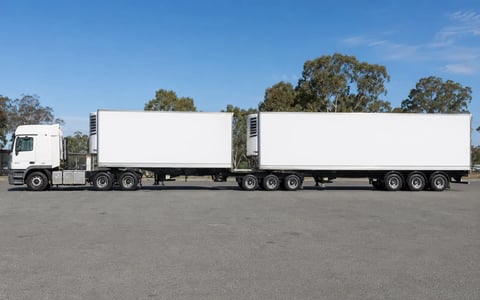
Curtainsiders, tippers and refrigerated trailers, financed alone or with a prime mover.
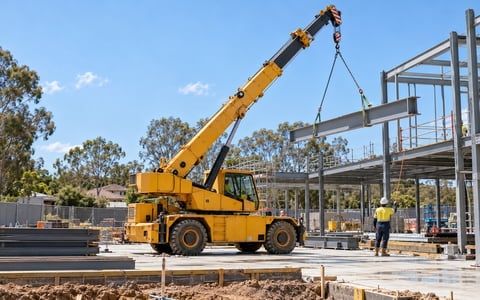
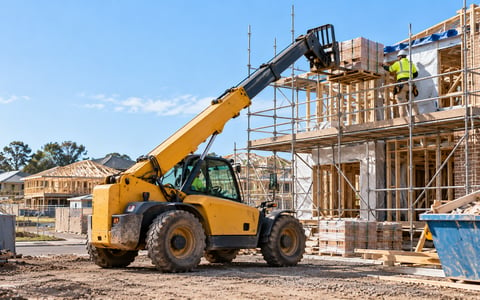
Excavators, loaders and cranes, where hire or an operating lease can suit short contracts.

Tractors and headers, with seasonal repayments available on some structures, subject to lender.
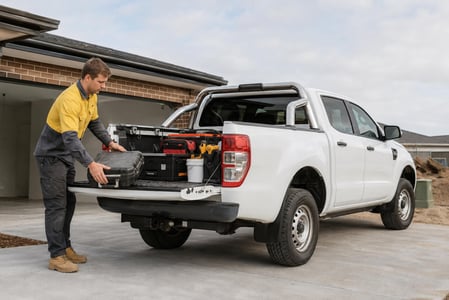
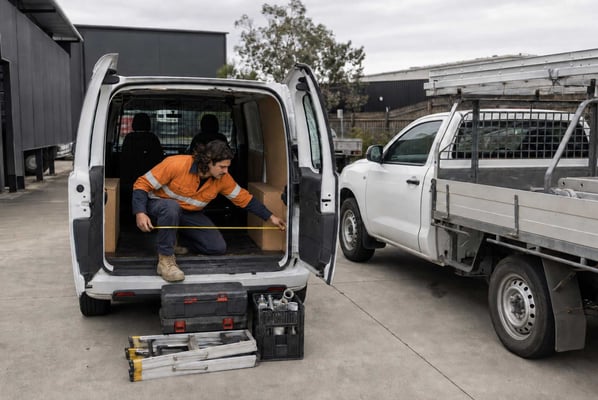
Utes, vans and work cars, where the ATO car limit can cap the GST credit on cars.
Banks, dealer finance and specialist asset lenders offer them, and finance brokers arrange them.
EF Financial Group Pty Ltd ACN 647 510 790 CRN 530270 Authorised under Australian Credit Licence Number: 389328.

Tell us about the asset and your business, and we will match you to the structure and lenders that suit your plans.


Straight answers on ownership, GST, tax and repayments for Australian businesses.
The difference between a chattel mortgage and a finance lease is ownership. Under a chattel mortgage you own the asset from day one, the lender registers its security interest on the PPSR until the loan is repaid, and a GST-registered business can claim the GST upfront. Under a finance lease the lender owns the asset, you make lease payments with GST on each payment, and the residual is payable at the end. Confirm the tax treatment with your accountant.
A chattel is a movable business asset, so a chattel lease means a lease of one, but it is not a standard Australian product name. A quote using the term could describe a chattel mortgage or a finance lease. A chattel mortgage is a loan where you own the asset and the lender holds security over it. A finance lease is a rental agreement where the lender owns the asset. Check which one a quote describes, because ownership, GST timing and tax treatment differ.
A finance lease is an arrangement where the lender buys the asset and leases it to your business for a fixed term. You make regular lease payments, and at the end of the term the agreed residual is payable: you can pay it and buy the asset if the lender agrees, refinance it, or return the asset and settle any shortfall against the residual. Lease terms differ by lender, so check them before you sign.
A chattel mortgage is a widely used structure for GST-registered businesses that want to own the asset, because you own it from day one and can claim the GST upfront. Hire purchase also gives an upfront GST credit, with ownership passing on the final payment. A finance lease can suit businesses that want end-of-term choices instead. General information only; confirm the right structure with your accountant.
Hire purchase differs from a chattel mortgage mainly in when ownership passes. Under a chattel mortgage you own the asset from day one and the lender holds security over it. Under hire purchase the lender owns the asset until your final payment. For a GST-registered business, the GST credit is generally claimed upfront under both, according to the ATO. General information only; confirm with your accountant.
Property is not always needed for a chattel mortgage or finance lease. Both are backed by the asset itself, so many lenders do not require property as extra security. They still assess your ABN, trading history, credit file and the age and value of the asset. Subject to lender assessment.
Equifund takes one application and matches it to the lenders on its panel that suit your profile and the structure you want, including banks, second-tier lenders and specialist asset finance lenders. Your accountant confirms the tax treatment, and fees, rates and terms are set by the lender and confirmed in writing before you sign. Pre‑approval is obligation-free.
A GST-registered business can claim GST on both a chattel mortgage and a finance lease, but the timing differs. Under a chattel mortgage the GST in the purchase price is generally claimed as a credit in the BAS for the period of purchase. Under a finance lease, GST is included in each payment and claimed as you pay, according to the ATO. On a $200,000 GST-inclusive truck, the GST is $18,182. General information only; confirm with your accountant.
Neither a chattel mortgage nor a finance lease is better for tax in every case; it depends on your business structure and taxable income. Under a chattel mortgage, the interest and depreciation are generally deductible for the business-use portion. Under a finance lease, the lease payments are generally deductible instead. Your accountant can confirm which suits your situation.
Under a chattel mortgage your business owns the asset and generally claims the depreciation. Under a finance lease the lender owns the asset, so you generally deduct the lease payments instead. Eligible small businesses with aggregated turnover under $10 million can use the simplified depreciation pool, deducting 15% in the first year and 30% of the pool balance each year after, or immediately deduct assets costing less than $20,000, according to the ATO. Confirm with your accountant.
The ATO car limit affects a chattel mortgage only when the asset is a car, meaning a motor vehicle designed to carry a load under 1 tonne and fewer than 9 passengers. For cars, the limit is $69,883 for 2026-27, which caps the depreciation, and the GST credit is capped at $6,353, according to the ATO. Trucks, trailers, machinery and vehicles designed to carry 1 tonne or more are not cars. Confirm with your accountant.
Neither a chattel mortgage nor a finance lease is automatically lower. A balloon on a chattel mortgage and a residual on a finance lease both reduce the regular repayment by deferring part of the amount to the end of the term. As an illustration, on a $200,000 truck at 8.5% p.a. over 5 years, a 30% balloon or residual brings repayments from about $4,105 to about $3,295 a month. Deferring more usually means a higher total cost. Indicative only, not a quote or offer.
A balloon on a chattel mortgage is a lump sum due at the end of the term, a percentage of the price set by the lender based on the term and the asset's age, that lowers your regular repayments. At the end you pay it out to clear the loan, refinance it or trade the asset in. Indicative only, subject to lender assessment.
At the end of a finance lease the agreed residual is payable. You can pay it and buy the asset if the lender agrees, refinance it, or return the asset, in which case it is sold and you settle any shortfall against the residual. Check the end-of-term conditions in your lease before you sign, and plan for the residual ahead of time. Subject to the lender's terms.
Lenders set chattel mortgage and finance lease rates from their own cost of funds, which moves with the RBA cash rate, plus a margin, then adjust for your credit file, time trading, deposit, loan amount, the asset's age and the structure. Published chattel mortgage rates in Australia start from around 7.5% p.a. and can reach 20% p.a. or higher for some borrowers, depending on the credit profile and the asset (money.com.au, October 2026). Business finance often has no comparison rate, so compare the total cost in dollars, including fees. Indicative only, not a quote, offer or rate guarantee.
Low-doc versions of both a chattel mortgage and a finance lease are offered by some lenders for established ABN holders without up-to-date financials. Instead of tax returns, lenders usually ask for recent BAS or business bank statements, and the deposit, term or rate can differ from a full-doc application. Subject to lender assessment.
No-deposit chattel mortgages and finance leases may be available for prime applications, subject to lender assessment. Lenders may ask for a deposit if your credit file is impaired, your ABN is newer or the asset is older or bought privately. A deposit can also widen the lender pool and improve the rate offered.
Chattel mortgage and finance lease pre‑approval is typically issued within 24 hours* once your BAS or bank statements and the asset details, such as the dealer quote or the make, model and year, are provided, subject to lender assessment. Settlement timing then depends on the lender, the seller and your documents.
$0 deposit is available for prime credit applications only.
Typical prime criteria include an active ABN of 2 years or more, GST registration, a clean credit file with no recent defaults or insolvency events, demonstrated trading income supported by BAS or bank statements, and a new or late-model asset purchased through a recognised dealer. Loan-to-value, term, balloon, rate and fees vary by lender, asset type, age and applicant profile. Pre‑approval is an indicative offer only and is subject to a full credit and verification check by the funding lender. The information on this page is general information only and does not take into account your objectives, financial situation or needs. Consider whether it is appropriate for you before acting on it.
*Pre‑approval timeframes are indicative only and subject to lender assessment and eligibility criteria.
Sources: ATO, GST hire purchase and leasing; ATO, small business pool; ATO, car thresholds 2026‑27; ATO, $20,000 instant asset write-off; money.com.au, chattel mortgage rates, October 2026. ATO figures last checked 2 November 2026.