Apply for Farm Machinery Pre-Approval
Tell us about the machine and your farm business, and we will match you to the structure and lenders that suit your season.
Pick the wrong structure and you could claim the GST later than you need to, or stretch cash flow between harvests. Compare all four options on ownership, GST, tax and repayments, then apply once.
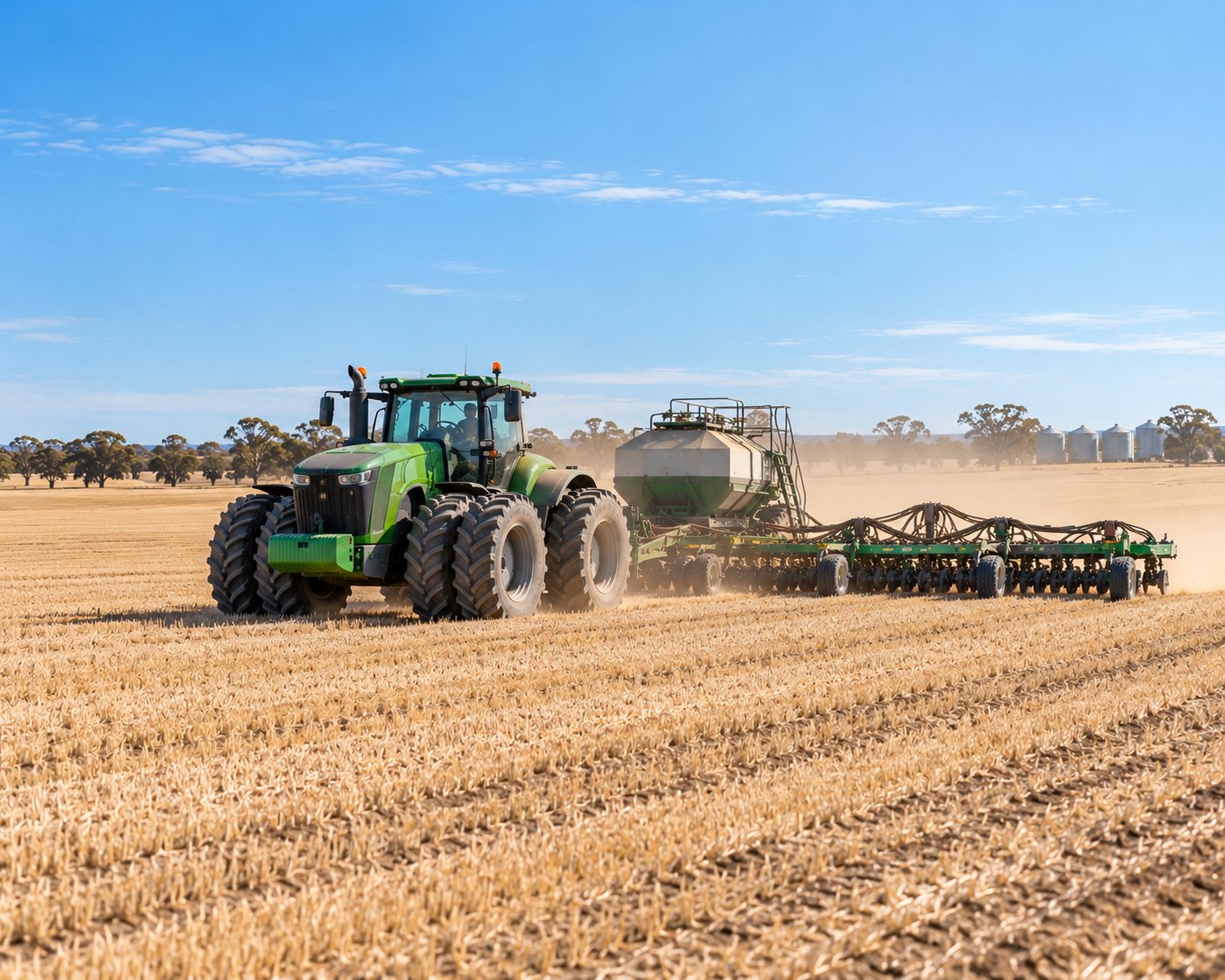
Side by side for tractors, headers, seeders, sprayers and hay gear. Buying a specific machine? Start with our farm equipment finance page.
Swipe to compare all four
| Feature | Chattel mortgageWidely used | Hire purchase | Finance lease | Operating lease |
|---|---|---|---|---|
| Best for | GST-registered Australian primary producers | Owner-operators wanting ownership | Predictable lease costs | Fleets wanting refresh cycles |
| Deposit | $0 for prime applications | $0 for prime applications | $0 for prime applications | Set by the lessor |
| Term | 1-7 years | 1-7 years | 2-5 years | 2-5 years |
| GST | Claim upfront if GST‑registered | Claim upfront if GST‑registered | On payments | On payments |
| Own at end | Yes | Final payment | Buy for the residual if the lender agrees | Return machine |
| Balloon | Optional, typically up to 40% | Set by lender | Residual agreed at the start | None |
| Seasonal repayments | Available, subject to lender | Available, subject to lender | Usually fixed | Usually fixed |
An illustrative example on a $250,000 tractor over 5 years, with three structures side by side.
Indicative only. Repayments calculated at 8.5% p.a. over 60 months, payments in arrears, last checked 28 October 2026. Not a quote or offer. Excludes tax effects; tax outcomes are general information only, confirm with your accountant.
Specialist lenders across Australian agriculture. Select your industry to highlight the machines it usually finances.
Loan size, term and how older units are valued change from one machine type to the next.
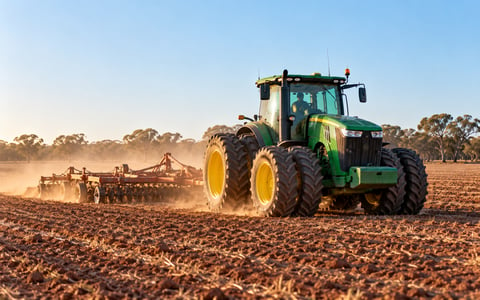
Utility, row-crop, high-horsepower and articulated tractors. New or used, from John Deere, Case IH, New Holland, Fendt, Massey Ferguson, Kubota and other makes.
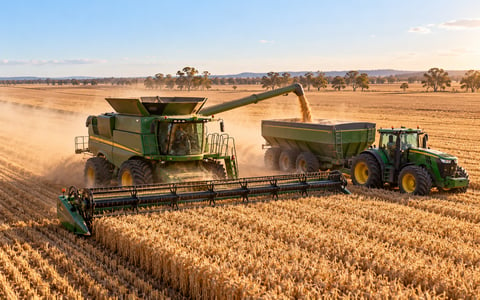
Headers and harvesters (John Deere S-series, Case IH Axial‑Flow, New Holland CR) plus fronts and comb trailers. High loan amounts, often with a balloon to keep repayments down.
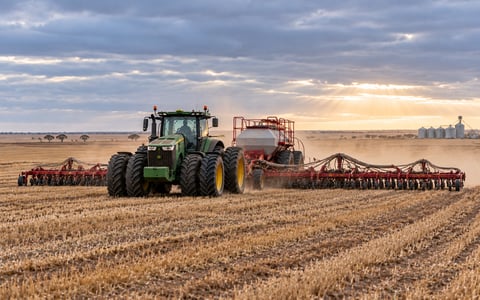
Air seeders, seeder bars, air carts and tillage gear (Bourgault, Morris, John Deere, Horwood Bagshaw). Usually financed ahead of sowing.
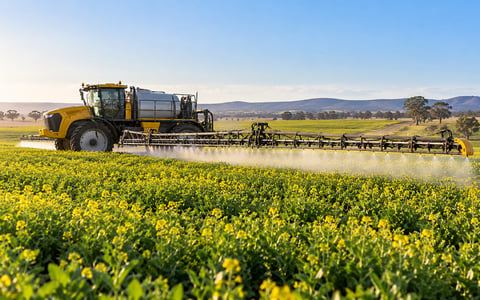
Self-propelled boom sprayers and trailing sprayers (Goldacres, Hardi, John Deere, Miller, Croplands). Common for broadacre growers and spray contractors; valuations apply on older units.
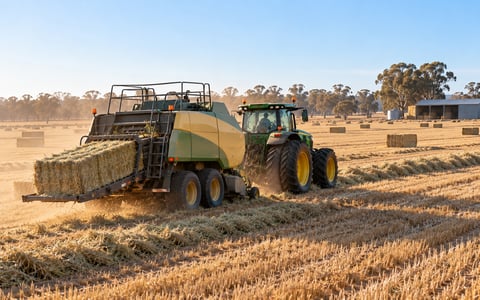
Round and square balers, mowers, rakes and tedders (John Deere, Krone, Claas, New Holland, Kuhn). Common for livestock, dairy and contract hay operators.
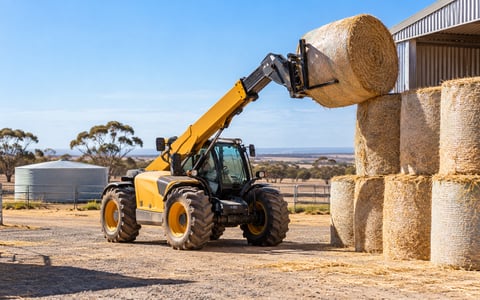
Telehandlers and materials handling (Manitou, JCB, Merlo), plus used tractors and headers. Specialist lenders may consider machinery a bank declines; valuations apply on units over 15 years.
Banks, dealer finance, specialist agricultural lenders and finance brokers all offer them.
EF Financial Group Pty Ltd ACN 647 510 790 CRN 530270 Authorised under Australian Credit Licence Number: 389328.

Tell us about the machine and your farm business, and we will match you to the structure and lenders that suit your season.


Straight answers on chattel mortgage, hire purchase and leasing for farm machinery.
For most GST-registered Australian primary producers, a chattel mortgage is the most commonly used structure. You own the machine from day one, claim the GST in the purchase price in your next BAS, and can deduct the interest and depreciation. Hire purchase works in a similar way, while a lease suits producers who would rather not own the machine. General information only; confirm the right structure for your situation with your accountant.
The difference is ownership: under a chattel mortgage you own the tractor from day one and deduct depreciation plus interest, while under a finance lease the lender stays the legal owner and you use the tractor for a fixed term. Under a chattel mortgage the lender registers its security interest on the PPSR until the loan is repaid. Chattel mortgage suits producers who run machinery for its full working life; finance lease suits ag contractors who want predictable lease costs. Confirm the tax treatment with your accountant.
Lenders assess a family farm or sole trader on the business itself, not only the people running it. A sole trader applies under their own ABN, with BAS or tax returns showing the farm income. Where the farm is held in a family trust or partnership, the application is made in that entity’s name and the trustees or partners typically provide a guarantee. Subject to lender assessment.
Most lenders ask for four things: your ABN, how long it has been active and whether the business is registered for GST; the machine details from a dealer quote, invoice or private sale, with the make, model, year and hours; recent BAS or business bank statements, with full-doc applications also asking for financials and tax returns; and any current loans or leases on machinery or land, so new repayments can be planned around them. Low-doc options need less. Subject to lender assessment.
Equifund takes one application and matches it to the lenders on its panel that suit your profile, including banks, second-tier lenders and specialist agricultural and asset finance lenders. Matching looks at your credit, trading history, harvest or contract income, the machine's type, age and hours, your deposit and GST status, so you only apply once. Pre‑approval is obligation-free, and fees, rates and terms are set by the lender and confirmed in writing before you sign.
Used tractors, headers and other farm machinery can be financed in Australia, including dealer, private and clearing sales (see used equipment finance). Many banks limit how old a machine can be at the end of the loan term, while specialist asset finance lenders consider older machines case by case, based on your profile and the machine's condition, hours and valuation. Older machines may need a deposit. Subject to lender assessment.
GST-registered primary producers can claim the GST in the purchase price of farm machinery as a credit in their next BAS when they buy with a chattel mortgage or hire purchase. Under a finance or operating lease, GST is included in each payment and claimed as you pay. If your business is not registered for GST, you cannot claim it. General information only; confirm with your accountant.
If your farm business is not registered for GST, neither structure lets you claim the GST in the purchase price, so the choice comes down to when title passes to you. A chattel mortgage gives you ownership from day one, while under hire purchase title passes when you make the final payment. Confirm the tax treatment with your accountant.
No, the car cost limit does not apply to farm machinery. Tractors, headers, balers, sprayers, seeders and telehandlers are purpose-built plant, not passenger vehicles, so the $69,883 limit for FY2026-27 does not cap the deduction. The full cost (GST-exclusive if you claim the GST credit) can be depreciated. General information only; confirm with your accountant.
Farm machinery is depreciated using the prime cost or diminishing value method. The Commissioner's effective life for tractors and combine harvesters is 12 years, with a 6⅔-year statutory cap for primary producers who use the Commissioner's determination. Under a chattel mortgage or hire purchase you claim the depreciation; under a lease, the lender claims it instead. Confirm with your accountant.
A balloon lowers your regular repayments by deferring part of the loan to a lump sum due at the end of the term. On a $250,000 tractor at 8.5% p.a. over 5 years, a 30% ($75,000) balloon brings repayments from about $5,130 to about $4,120 a month. At the end you pay, refinance or trade in to clear the balloon. Indicative only, subject to lender assessment.
At the end of a finance lease you can pay the agreed residual and buy the header if the lender agrees, refinance the residual, or return the machine to the lender and settle any shortfall. The residual is set at the start of the lease, so you know the end-of-term cost from day one. Confirm the tax treatment with your accountant.
An operating lease can suit contract harvesters who want servicing bundled into one payment. You return the machine at the end of the term, so there is no residual value risk, but you never own it and the total cost is usually higher than a chattel mortgage over the same term. Compare both before deciding.
Lenders set farm machinery finance rates from their own cost of funds, which moves with the RBA cash rate (4.85% from 4 November 2026), plus a margin, then adjust for your credit profile, time trading, deposit, the machine and the structure. Published chattel mortgage rates in Australia start from around 7.5% p.a. and can reach 20% p.a. or higher for some borrowers, depending on the credit profile and the asset (money.com.au, October 2026). Rates last checked 28 October 2026. Indicative only, not a quote, offer or rate guarantee.
Machine age is one of the biggest rate factors. Machines under 5 years old typically attract prime rates for strong applicants and the loading generally rises with age: machines 10 to 15 years old typically add 1.0 to 2.0%, and machines over 15 years add 2.5 to 4.0%. Under 2 years trading typically adds 0.5 to 1.5%, and mainstream brands with strong resale values attract sharper rates than niche or imported makes. Indicative only, subject to lender assessment.
Farm machinery finance repayments depend on the amount, term, rate and balloon. As an illustration, on a $250,000 high-horsepower tractor at 8.5% p.a. over 5 years, a chattel mortgage with no balloon is about $5,130 a month, and a 30% ($75,000) balloon brings it to about $4,120 a month, with the balloon owing at the end. Compare the total cost, including fees, not just the monthly figure. Indicative only, not a quote or offer.
Seasonal or annual repayments matched to harvest income may be available on a chattel mortgage or hire purchase, subject to lender assessment, while lease payments are usually fixed. Lenders look at your BAS or bank statements and past harvest income to see how the repayments fit across the year, so tell us your main income months when you apply. Subject to lender assessment.
No-deposit farm machinery finance may be available for prime applications, subject to lender assessment. Lenders may ask for a deposit if your credit file is impaired, your ABN is newer or the machine is older or bought privately. A deposit or trade-in can also widen the lender pool and improve the rate offered.
Farm machinery finance pre‑approval is typically issued within 24 hours* once your BAS or bank statements and the machine details, such as the dealer quote or the make, model and year, are provided, subject to lender assessment. Settlement timing then depends on the lender, the seller and your documents.
$0 deposit is available for prime credit applications only.
Typical prime criteria include an active ABN of 2 years or more, GST registration, a clean credit file with no recent defaults or insolvency events, demonstrated trading income supported by BAS or bank statements, and new or late-model farm machinery purchased through a recognised dealer. Loan-to-value, term, balloon, rate and fees vary by lender, asset type, age and applicant profile. Pre‑approval is an indicative offer only and is subject to a full credit and verification check by the funding lender. The information on this page is general information only and does not take into account your objectives, financial situation or needs. Consider whether it is appropriate for you before acting on it.
*Pre‑approval timeframes are indicative only and subject to lender assessment and eligibility criteria.
Sources: ATO, GST hire purchase and leasing; ATO, effective life; ATO, car cost limits; RBA, cash rate; money.com.au, chattel mortgage rates. ATO and RBA figures last checked 2 November 2026.