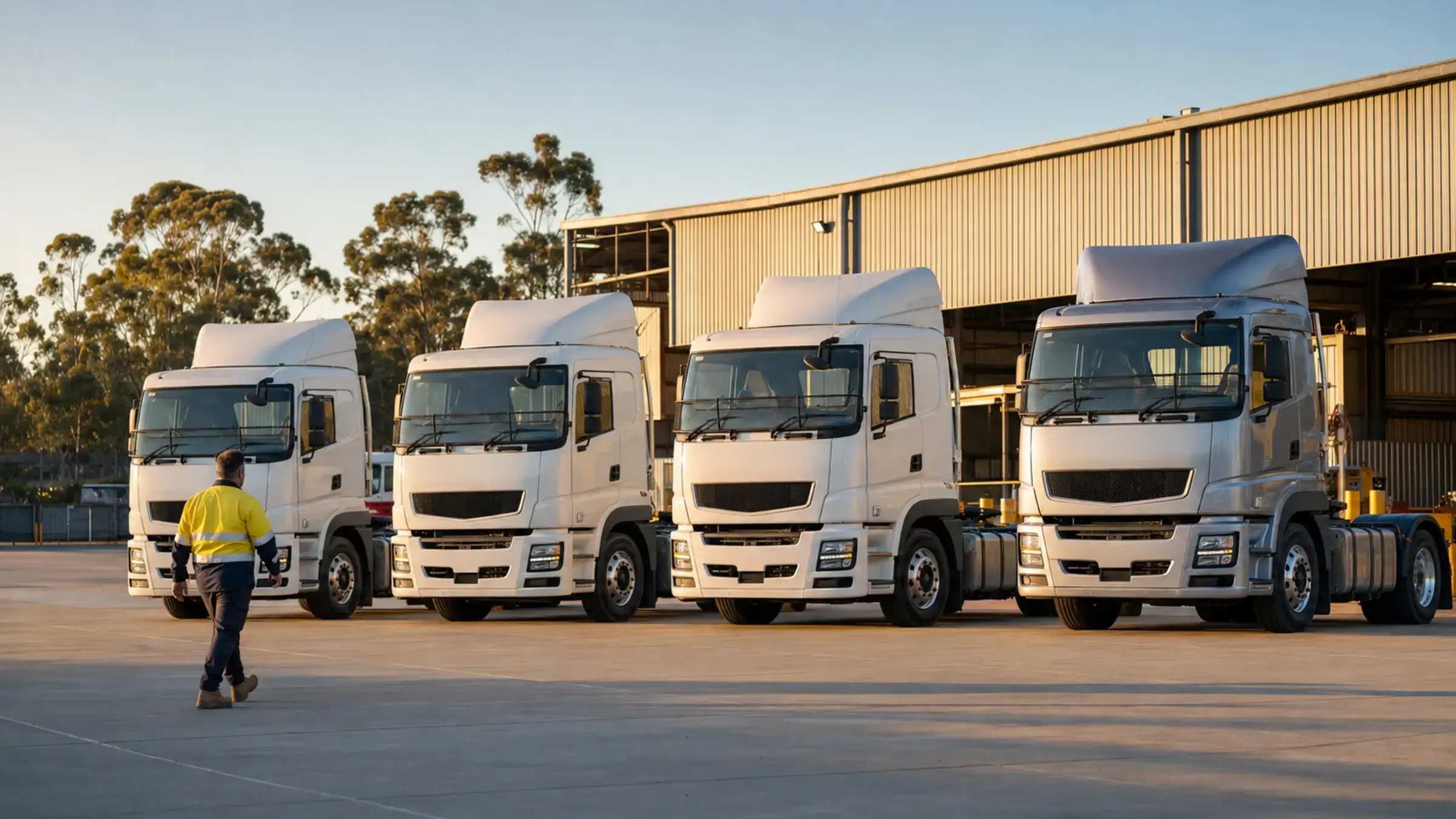

Upgrading two or more trucks at once is a big capital call, and paying cash for a whole fleet ties up money most operators would rather keep in the business. Commercial fleet finance lets Australian transport businesses fund a multi-truck upgrade through one structured facility, spread across a wide panel of specialist lenders, with repayments aligned to how the trucks earn.
What Is Commercial Fleet Finance in Australia?
Commercial fleet finance is a structured loan or lease product designed for businesses financing two or more vehicles at once. Unlike a standard single-truck application, a fleet submission is assessed on the business's overall financial position and the combined asset profile, which often unlocks stronger lender offers and reduces the number of credit enquiries on your file.
Equifund has access to a wide panel of Australian specialist lenders covering established fleet operators across new and used trucks, different makes and models, and multiple drivers under a single business entity.
Which Finance Structure Suits a Multi-Truck Fleet Upgrade?
Three structures cover the majority of fleet upgrades.
| Structure | Ownership | GST treatment | Best for |
|---|---|---|---|
| Chattel mortgage | From day one | Full claim upfront | Operators keeping trucks long term; GST-registered businesses |
| Finance lease | Optional at end (residual) | Claimed across payments | Fleet operators wanting off-balance-sheet treatment; scheduled cycling |
| Hire purchase | On final payment | Spread over term | Operators wanting eventual ownership without the upfront GST claim |
The right structure depends on your GST registration status, how long you plan to hold each truck, your entity's tax position and your lender's requirements. Your accountant is the right person to confirm which structure delivers the best outcome for your situation. This is general information only and does not constitute tax advice.
Can You Finance Multiple Trucks on a Single Application?
Yes. Equifund can package three or more trucks under a single credit submission across its wide panel of specialist lenders. A combined submission typically reduces the number of hard credit enquiries on the business credit file compared to applying truck by truck, and fleet-sized applications often attract more competitive rate and fee structures than individual submissions.
For larger fleet upgrades involving five or more units, Equifund can split the application across multiple lenders in the panel to manage exposure limits while still operating as a single transaction for the operator.
Want to know what your fleet upgrade is likely to qualify for? Talk to Equifund's truck finance team about a fleet pre-approval before you finalise which units you are buying.
How Does the Instant Asset Write-Off Apply to Fleet Purchases?
The $20,000 Instant Asset Write-Off lets eligible small businesses with aggregated turnover under $10 million immediately deduct the cost of an asset first used or installed ready for use in the income year, assessed per asset. Most trucks cost well above $20,000, so at fleet scale the trucks are generally depreciated or financed rather than written off in full. The $20,000 threshold was announced to continue permanently from 1 July 2026, but that measure was not yet law at the time of writing.
Eligibility depends on:
- Aggregated annual turnover: the write-off is aimed at small businesses under the turnover threshold
- Asset start date: the income year the truck is first used or installed ready for use
- New or second-hand: some provisions treat used assets differently
- The applicable ATO threshold for the relevant financial year
Because each truck is assessed individually and the rules change year to year, your accountant is the right person to confirm what you can claim before you time a fleet upgrade around tax. This is general information only and does not constitute tax advice. See our guide to the best truck finance options in Australia for more on how finance structures interact with the write-off.
What Documents Do You Need to Finance a Fleet Upgrade?
Standard (full-doc) fleet applications typically require:
- ABN and business registration: confirming the borrowing entity and structure
- Financials: the last two years of business tax returns or financial statements
- Bank statements: the last three months of business trading statements
- Asset details: make, model, year, purchase price and VIN where available for each truck
- Existing commitments: details of current finance facilities
- Identification: for each director or guarantor
Low-doc options are available for established operators with strong BAS history who cannot readily produce finalised tax returns. Equifund can confirm which lenders in the panel accept low-doc fleet submissions for your situation.
How Do Lenders Assess a Commercial Fleet Application?
Fleet lenders look at a broader set of factors than a single-truck submission. The key variables are:
- Business trading history: most fleet lenders want to see two or more years of ABN trading
- Asset profile: the make, model, year and condition of each truck affects which lenders will fund it and at what rate
- Existing commitments: total finance exposure relative to revenue is weighted more heavily at fleet scale
- Director credit history: personal credit of directors is assessed even on business applications
- Lender age limits: most prime lenders cap the age of used trucks they will fund, typically up to 10 to 15 years
A broker with a wide panel can match each unit in the fleet to the lender most likely to approve it, rather than forcing all units through a single lender with tighter criteria on older or higher-mileage assets. If you are still sourcing units, you can compare trucks for sale from verified dealers nationally while your pre-approval is being arranged.
What Repayment Structures Are Available for Fleet Finance?
Fleet operators typically choose between three repayment structures:
- Level monthly repayments: consistent outflow across the full term, straightforward to budget
- Balloon repayment: lower monthly payments during the term with a larger lump sum at the end, which can be paid out, refinanced or offset by trading the trucks in
- Seasonal repayments: payments aligned to revenue cycles, more common in agricultural and seasonal transport operations
Repayment terms run from 24 to 84 months depending on the asset age, lender and structure chosen. Longer terms reduce monthly outgoings but increase total interest paid across the facility. Actual rates depend on the business profile, asset, term and lender selected. Run your numbers on the Finance Calculator to see indicative repayments before you commit. This is general information only and does not constitute financial advice.
When Is the Right Time to Upgrade a Commercial Fleet?
The most common triggers for a fleet upgrade are:
- Rising running costs: maintenance and downtime on ageing units exceeding the monthly cost of newer trucks
- New contract wins: additional capacity the existing fleet cannot service
- FY tax timing: depreciation or write-off planning with your accountant
- Warranty expiry: cost risk on out-of-warranty units transferring fully to the operator
- Compliance upgrades: telematics, emissions or load-management systems required to retain major contracts
Equifund can issue a fleet pre-approval before you have finalised which units to purchase, so you approach dealers and private sellers with confirmed capacity and terms. Apply Now or call 1300 464 805 to get started.
Frequently Asked Questions
What is commercial fleet finance in Australia?
Commercial fleet finance is a specialist loan or lease arrangement that lets Australian businesses fund two or more trucks simultaneously. The application is assessed on the business's total financial profile rather than individual units, which often results in fewer credit enquiries and access to fleet pricing on rates and fees.
Can you finance multiple trucks on one application?
Yes. Equifund can package three or more trucks under a single credit submission across its wide panel of specialist lenders. A combined submission typically reduces the number of hard credit enquiries on the business credit file and often qualifies for fleet pricing that is not available on single-truck applications.
What finance structure is best for a multi-truck fleet upgrade?
A chattel mortgage suits operators who want ownership from day one with an upfront GST claim. A finance lease suits those wanting off-balance-sheet treatment and end-of-term flexibility. Hire purchase transfers title on the last payment. The right structure depends on your GST position, tax planning and how long you plan to keep the trucks.
How does the Instant Asset Write-Off apply to fleet purchases?
The $20,000 Instant Asset Write-Off applies per asset for eligible small businesses with turnover under $10 million, and most trucks cost well above that threshold, so at fleet scale they are generally depreciated or financed rather than written off in full. The $20,000 threshold was announced to continue from 1 July 2026 but was not yet law at the time of writing. Your accountant should confirm what applies before you commit.
What documents do I need for fleet finance?
A full-doc fleet application typically requires two years of business tax returns or financial statements, three months of business bank statements, details of each truck being financed and identification for directors. Low-doc options are available for operators with strong BAS history who cannot readily produce finalised tax returns.
Does fleet finance require a personal guarantee?
Most commercial fleet lenders in Australia require personal guarantees from directors of the borrowing entity. A broker can advise on which lenders in the panel have more flexible guarantee requirements, particularly for fleet applications from established businesses with a strong trading history and low existing finance commitments.
Can I finance used trucks in a fleet application?
Yes. Most fleet lenders will fund used trucks, though prime lenders typically apply age and kilometre limits, commonly up to 10 to 15 years depending on the lender. A broker with a wide panel can identify lenders who will fund older or higher-mileage units that mainstream banks may decline.
How long does fleet finance take to arrange?
Pre-approval is typically available within about one business day once the application is submitted. Full settlement timeframes depend on the lender, the assets and your documentation, and are longer for larger or more complex fleet submissions requiring multiple lender approvals. Settlement timing is confirmed at quote stage.
What is a balloon repayment in truck fleet finance?
A balloon repayment is a lump sum due at the end of a truck finance term, after which monthly repayments during the term are lower. At the end, the operator can pay out the balloon, refinance it or trade the truck in. Balloons are common in fleet finance where operators plan to cycle trucks on a regular schedule.
Can a business get fleet finance with a low-doc application?
Yes. Low-doc fleet finance is available for operators with strong BAS history who cannot readily produce finalised tax returns. Most low-doc lenders accept two years of BAS statements as an alternative, though interest rates are generally higher than full-doc applications and maximum loan amounts may be lower.
What is the maximum term for commercial fleet finance in Australia?
Commercial fleet finance terms in Australia typically run from 24 to 84 months depending on the asset age, lender and structure chosen. Longer terms reduce monthly repayments but increase total interest paid. Most prime lenders cap terms on older trucks, so the maximum available term depends on the age of each asset at the end of the proposed term.
Should I buy or lease trucks for a fleet upgrade?
Buying through a chattel mortgage gives you ownership and allows you to claim depreciation or the Instant Asset Write-Off where eligible. Leasing keeps the trucks off the balance sheet and offers end-of-term flexibility. Fleets that upgrade regularly often prefer leasing or a balloon structure. Operators running trucks past the finance term usually do better buying. Your accountant can model the tax outcome for your situation.
How Equifund Can Help
Financing a multi-truck upgrade is where a broker earns its keep. Instead of forcing every unit through one bank's criteria, Equifund works across a wide panel of specialist lenders and matches each truck to the lender most likely to fund it, then packages the fleet into a single, competitive submission.
- Pre-approval in 24 hours
- No impact on your credit score to get a rate
- Finance amounts up to $2M
- Owner-operators, ABN holders and company structures welcome
Ready to size up your fleet upgrade? Apply Now or run the numbers on the Finance Calculator.
Any rates, thresholds, terms and timeframes mentioned are indicative only and depend on lender credit assessment and current ATO rules at the time you apply. Confirm your own position with your accountant and at quote stage before relying on them.
Sources: Truck Industry Council (T-Mark truck sales). Figures are current at the time of writing and may change.
Disclaimer: This article is general information only and does not constitute financial, tax or legal advice. It does not take into account your personal circumstances, objectives or needs. Equifund Financial Group is a commercial finance broker, not a registered tax agent or licensed financial adviser. Tax treatment depends on individual circumstances and current ATO rules. Confirm with your accountant before relying on any tax position. All finance is subject to lender credit assessment, terms and conditions. Rates, lead times and product availability are indicative and current at time of writing, and may change. Market figures, sales data and forecasts cited reflect publicly available data at the time of publication.