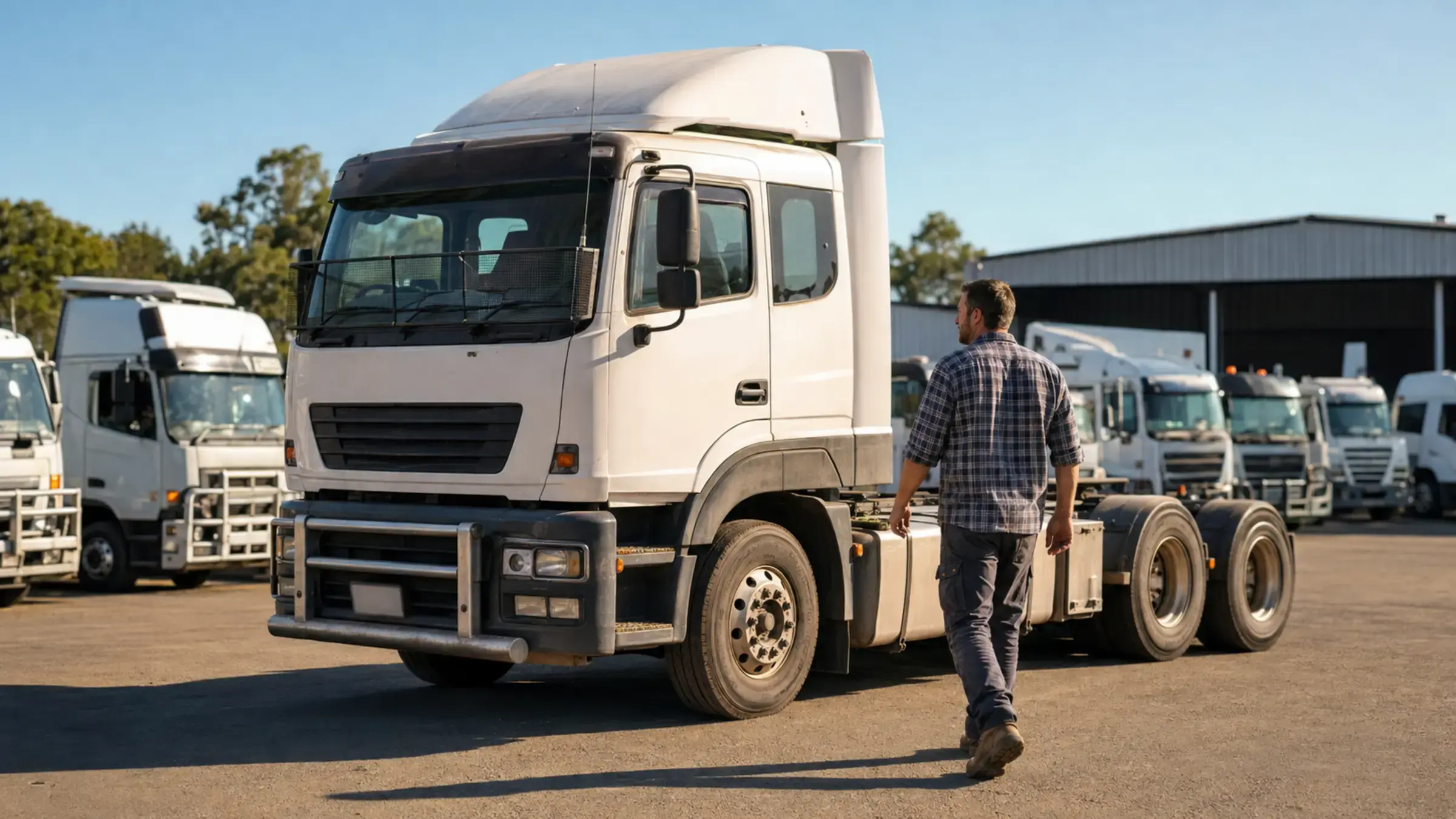

Buying a second-hand truck lets Australian operators get capacity on the road for a fraction of the price of new, and the right used truck finance keeps the money in the business rather than sunk into an outright purchase. The best structure depends on your industry, how long you plan to keep the truck, your GST position and how your income runs across the year. This guide maps every major option to the business types where each one works best.
What Is Used Truck Finance in Australia?
Used truck finance is a commercial loan or lease product that funds the purchase of a second-hand truck. Unlike a new-truck loan, used applications are assessed on the truck's age, kilometres and condition as well as the business's financial profile. Most lenders cap the age of used trucks they will fund, with prime lenders typically setting a limit of 10 to 15 years at the end of the proposed loan term.
The main finance structures available for used trucks are:
- Chattel mortgage: most common for GST-registered businesses; ownership from day one
- Finance lease: preferred where off-balance-sheet treatment matters
- Hire purchase: for operators wanting eventual ownership without the upfront GST claim
See the best truck finance options in Australia for a full comparison of lender types and structures available in 2026.
Chattel Mortgage, Finance Lease or Hire Purchase: Which Suits Used Trucks?
The structure that delivers the best outcome depends on three things: whether you want ownership from day one, when you want to claim the GST, and how long you plan to hold the truck.
| Structure | Who owns it? | GST claim | Best for |
|---|---|---|---|
| Chattel mortgage | You, from day one | Upfront in full | GST-registered operators keeping the truck long term |
| Finance lease | Lender (optional buyout) | Spread over term | Operators cycling trucks on schedule; off-balance-sheet preference |
| Hire purchase | You, on final payment | Spread over term | Operators wanting ownership without an upfront GST claim |
Your accountant is best placed to confirm which structure delivers the strongest tax outcome for your entity. This is general information only and does not constitute tax advice.
How Do Growing Businesses Choose Between Truck Leasing and a Chattel Mortgage?
The decision comes down to two core questions: do you plan to hold the truck past the finance term, and do you want the upfront GST benefit?
Choose a chattel mortgage if:
- You are GST-registered and want to claim the full GST credit on the purchase price immediately
- You plan to run the truck past the end of the loan term (ownership matters)
- You want to access depreciation deductions or the Instant Asset Write-Off in the year of purchase
- Your business is growing and you want to build equity in your fleet assets
Choose a finance lease if:
- You cycle trucks on a regular schedule (every 3 to 5 years) and want to hand the asset back
- You prefer predictable fixed payments and no end-of-term residual risk
- Off-balance-sheet treatment is preferred for accounting or covenant purposes
- You want the lease payments to be fully deductible over the term
Medium manufacturing and logistics businesses often use a mix of both: chattel mortgages on core trucks they hold for 7 or more years, and finance leases on specialised equipment they cycle to keep pace with technology changes. For multi-truck upgrades, read our guide on how to finance a multi-truck fleet upgrade in Australia.
Which Truck Finance Works Best for Seasonal Agriculture Businesses?
Agriculture businesses face an income pattern that standard equal monthly repayments do not suit. Revenue arrives in peaks (harvest, livestock sale, crop delivery) and repayments that fall during the low season create real pressure on the books.
The most suitable structures for seasonal agriculture operators are:
- Chattel mortgage with a balloon repayment: lower equal monthly repayments during the term, with a larger payment timed to coincide with a harvest or sale period
- Seasonal repayment schedule: some specialist lenders in the Equifund panel offer repayment patterns with lower payments in the off-season and higher payments aligned to income peaks
- Low-doc applications: established growers and contractors assessed on BAS income rather than finalised tax returns can access competitive structures without waiting for accounts to be completed
Truck financing for agriculture typically covers grain trucks, livestock transports, road trains and supporting service vehicles. The same panel that funds commercial truck finance nationally also funds specialist rural transport assets.
Which Truck Finance Options Do Construction Companies Commonly Use?
Construction businesses tend to prefer chattel mortgages on used trucks for three reasons: immediate ownership, upfront GST claim, and potential Instant Asset Write-Off eligibility. Construction project timelines also align well with fixed monthly repayments, since revenue from contracts is more predictable than seasonal agriculture income.
Common construction truck finance structures:
- Chattel mortgage on a used tipper, crane or fleet truck: most common, particularly where the business is GST-registered and holds trucks for the full loan term and beyond
- Hire purchase on older used trucks: where the truck age pushes it outside prime lender criteria, hire purchase through a specialist lender can still fund the asset with ownership transferring on the last payment
- Finance lease for crane trucks or specialised vehicles: where the asset is expensive and the business prefers to cycle it after a project cycle rather than hold it indefinitely
The Instant Asset Write-Off may apply to used trucks purchased by construction businesses that meet the ATO's turnover thresholds. This is general information only. Speak to your accountant before structuring a purchase for tax purposes.
What Truck Finance Suits a Business Upgrading Multiple Trucks at Once?
When replacing two or more trucks at once, a multi-unit fleet application under a single credit submission typically delivers better outcomes than applying for each truck separately. Key advantages:
- Fewer hard credit enquiries on the business and director credit files
- Fleet pricing on rates and fees not available on single-unit applications
- The ability to spread the application across multiple lenders in the panel, matching each truck to the lender most suited to that asset's age and condition
- A single point of contact and consolidated settlement timeline
For a detailed breakdown of how fleet applications work, including the documents needed and how lenders assess multi-truck submissions, read our full guide to financing a multi-truck fleet upgrade.
What Are the Credit and Age Requirements for Used Truck Finance?
Used truck finance criteria vary by lender. The key variables are:
- Truck age: most prime lenders cap the truck's age at 10 to 15 years at the end of the proposed loan term. A 10-year-old truck on a 5-year loan must be no older than 15 years at end of term for most mainstream lenders.
- Kilometres: some lenders set a kilometre ceiling (often 500,000 to 1,000,000 km depending on make and use). High-kilometre trucks that fall outside prime criteria can still be funded through specialist lenders at higher rates.
- Business trading history: most lenders want to see at least two years of ABN trading and a consistent banking history.
- Director credit: personal credit files of directors are assessed on most commercial truck applications, even where the loan is in the business name.
- Existing commitments: the total finance exposure of the business relative to its revenue is a key underwriting factor, particularly for multi-truck or fleet applications.
A broker with a wide lender panel can identify which lenders will fund a given truck based on its age, kilometres and the business's profile, rather than forcing every application through a single lender with tight used-asset criteria. If you are still shopping, you can compare used trucks for sale from verified dealers nationally as you line up finance.
How Do You Compare Commercial Vehicle Finance Lenders in Australia?
Rate is the most visible comparison point, but not the only one that matters on a used truck loan. Before committing to a lender, compare:
- Maximum truck age and kilometres: a lender that will not fund your truck at all is irrelevant regardless of its rate
- Balloon and residual flexibility: some lenders cap the balloon percentage or require a set residual, which affects your monthly repayments
- Settlement process: settlement timeframes vary by lender and are confirmed at quote stage; private-sale purchases generally take longer than dealer transactions
- Private-sale funding: not all lenders fund private-sale purchases, so confirm the lender accepts private-sale security before applying
- Deposit requirement: deposit requirements vary by lender and by the truck's age and kilometres, so confirm the position upfront
- Comparison rate: the stated interest rate does not include fees, so always ask for the comparison rate or total cost of credit across the loan term
Equifund's wide panel of specialist lenders covers used-truck finance across established operators of every size. Run your numbers on the Finance Calculator, then Apply Now or call 1300 464 805 to speak with a truck finance specialist.
Frequently Asked Questions
What is used truck finance in Australia?
Used truck finance is a commercial loan or lease product that lets Australian businesses purchase second-hand trucks without paying the full price upfront. It can be structured as a chattel mortgage, finance lease or hire purchase. Lenders assess the truck's age, kilometres and condition alongside the business's financial profile.
Can I get a chattel mortgage on a used truck?
Yes. A chattel mortgage is available on used trucks subject to lender age and kilometre limits, which typically range from 10 to 15 years depending on the lender. You take ownership from day one, claim the GST upfront and depreciate the truck over its effective life. The truck itself is the security for the loan.
What is the difference between truck leasing and a chattel mortgage?
Under a chattel mortgage you own the truck from day one and the lender holds a security interest. You claim the GST credit upfront and depreciate the asset. Under a finance lease the lender owns the truck and you pay to use it, claiming the payments as deductions over the term. Ownership and upfront tax treatment are the key differences.
Which truck finance suits a seasonal agriculture business?
Seasonal agriculture businesses typically benefit from flexible repayment structures, such as payments aligned to harvest or contract income periods rather than equal monthly instalments. A chattel mortgage or hire purchase with a balloon repayment reduces the regular payment burden and allows a larger payout when seasonal income is strongest. Low-doc options are also available for BAS-assessed income.
Which truck finance options do construction companies commonly use?
Construction companies commonly use chattel mortgages on used trucks, because it provides immediate ownership, allows the GST credit to be claimed upfront and may qualify for the Instant Asset Write-Off where thresholds are met. Finance lease is used where off-balance-sheet treatment is preferred. Many construction businesses also use hire purchase to spread ownership costs across project cycles.
What truck finance suits a business upgrading multiple trucks at once?
A multi-unit fleet application packaged under a single credit submission often delivers fleet pricing on rates and fees, and reduces the number of hard credit enquiries compared to applying truck by truck. Equifund can structure fleet upgrades across a wide panel of lenders, matching each unit to the lender most likely to fund it based on the truck's age, condition and the business's profile.
How old can a used truck be and still get finance?
Most prime lenders in Australia finance used trucks up to 10 or 15 years old at the end of the proposed finance term. Some specialist lenders on a wide panel will fund older trucks, though rates are typically higher and terms shorter. A broker with access to a broad lender panel can identify the best available offer on older or high-kilometre trucks that major banks decline.
What documents do I need for used truck finance?
A full-doc used truck finance application typically requires two years of business tax returns or financial statements, three months of business bank statements, details of the truck (make, model, year, VIN, purchase price), and identification for directors. Low-doc options using BAS history are available for operators who cannot readily produce finalised tax returns.
Does buying a used truck qualify for the Instant Asset Write-Off?
The $20,000 Instant Asset Write-Off can apply to new and second-hand assets for eligible small businesses under the turnover threshold, assessed per asset. Most trucks cost well above $20,000, so they are generally depreciated or financed rather than written off in full, and the rules change year to year. Speak to your accountant before structuring a used truck purchase for tax. This is general information only and does not constitute tax advice.
Do I need a deposit for used truck finance?
Deposit requirements vary by lender, the truck's age and kilometres, and the strength of the business's financial profile. Established operators with a strong profile financing a newer used truck often borrow with little or no deposit, while older or higher-mileage trucks may require a contribution. Equifund can confirm the deposit position across its panel for your situation.
What is a balloon repayment on used truck finance?
A balloon repayment is a lump sum payable at the end of the finance term, after which regular monthly payments during the term are lower. At the end, the operator can pay the balloon, refinance it or use the truck as a trade-in. Balloon structures are common on used trucks where operators cycle assets on a regular schedule.
How long does used truck finance take to arrange?
Pre-approval is usually available within about one business day once your application is submitted. Full settlement timeframes depend on the lender, the truck and your documentation, and are confirmed at quote stage. Private-sale purchases can take longer than dealer transactions due to the extra verification required on the vehicle and the seller.
How Equifund Can Help
Financing a used truck is where a broker earns its keep. The truck's age and kilometres decide which lenders will touch it, so instead of taking whatever one bank offers, Equifund matches your truck and your profile to the right lender from a wide panel of specialist lenders.
- Pre-approval in 24 hours
- No impact on your credit score to get a rate
- Finance amounts up to $2M
- Owner-operators, ABN holders and company structures welcome
Ready to fund your next truck? Apply Now or run the numbers on the Finance Calculator.
Any rates, thresholds, terms and timeframes mentioned are indicative only and depend on lender credit assessment and current ATO rules at the time you apply. Confirm your own position with your accountant and at quote stage before relying on them.
Sources: Truck Industry Council (T-Mark truck sales). Figures are current at the time of writing and may change.
Disclaimer: This article is general information only and does not constitute financial, tax or legal advice. It does not take into account your personal circumstances, objectives or needs. Equifund Financial Group is a commercial finance broker, not a registered tax agent or licensed financial adviser. Tax treatment depends on individual circumstances and current ATO rules. Confirm with your accountant before relying on any tax position. All finance is subject to lender credit assessment, terms and conditions. Rates, lead times and product availability are indicative and current at time of writing, and may change. Market figures, sales data and forecasts cited reflect publicly available data at the time of publication.