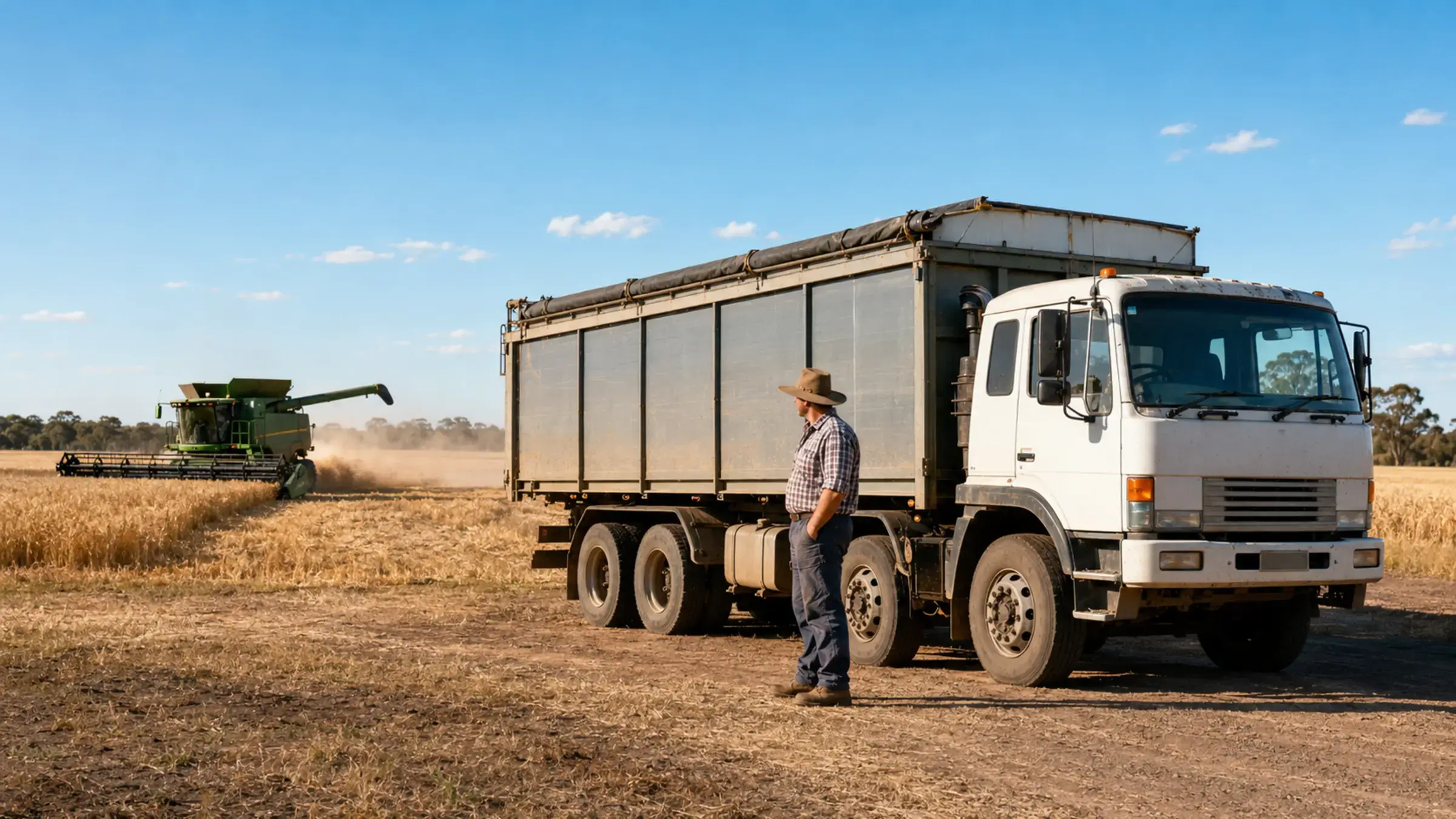

Standard truck finance is built around equal monthly repayments that suit businesses with consistent month-on-month income. Most Australian agriculture businesses do not have consistent month-on-month income. Grain growers, livestock operators, cropping contractors and rural transport businesses earn in seasonal bursts and spend heavily in the off-season. Specialist seasonal truck finance aligns repayments to the income cycle rather than fighting against it. This is general information only and does not constitute financial or tax advice.
Why Does Seasonal Agriculture Need Specialised Truck Finance?
A grain grower paying standard equal monthly repayments across 12 months is making significant debt repayments in months when the farm generates little or no income. A specialist seasonal repayment schedule concentrates higher repayments in post-harvest months and reduces them in the shoulder season, matching the actual income pattern of the business.
Agriculture businesses benefit from three features that standard lenders rarely offer:
- Seasonal repayment schedules: payments aligned to the income calendar, not a standard monthly schedule
- BAS-assessed income: low-doc applications assessed on quarterly BAS history rather than finalised tax returns
- Balloon repayment structures: lower regular payments with a lump sum timed to a harvest or livestock sale
See the best truck finance options in Australia for a full comparison of lender types and structures available in 2026.
Which Truck Finance Repayment Structures Suit a Seasonal Income Cycle?
The two most commonly used structures for seasonal agriculture truck finance are:
| Structure | How it works | Best for |
|---|---|---|
| Chattel mortgage with balloon | Lower regular payments, larger lump sum at end of term | Operators who can time the balloon to a harvest payment or livestock sale |
| Seasonal repayment schedule | Higher payments during income months, lower during off-season | Broadacre croppers, harvest contractors, seasonal transport operators |
| Low-doc BAS application | Assessed on BAS history, not finalised accounts | Operators with strong trading but incomplete or complex accounts |
Not all lenders in the market offer seasonal schedules. Equifund's panel includes specialist agricultural lenders that do. Ask specifically about seasonal repayment options when you contact the team.
What Types of Trucks Do Agriculture Businesses Commonly Finance?
The Equifund panel regularly funds the following agriculture truck types:
- Grain trucks: rigid trucks and B-double grain combinations for broadacre cropping and grain carting contracts
- Road trains: A-train, B-train and AB-train configurations for long-haul livestock and grain transport across WA, NT, Queensland and NSW
- Stock trucks and cattle transports: single-deck and double-deck livestock transports for beef, sheep and pig operations
- Water tankers and fuel tankers: on-farm water carting and property fuelling trucks
- Flat-decks and curtainsiders: for hay, silage, fertiliser and equipment transport across the property or to market
Each truck type has a different lender pool. Road trains and specialised livestock transports typically require a broker with wide panel access to find competitive funding, as mainstream lenders often cap the configurations they will fund.
What Is Low-Doc Truck Finance and Does It Suit Agriculture Businesses?
Low-doc truck finance is assessed on BAS history rather than finalised financial statements and tax returns. It suits agriculture businesses where:
- The operation is trading strongly but the accountant has not yet finalised the prior year's accounts
- Income is complex across multiple farming enterprises (cropping, livestock, contracting) and is difficult to present cleanly from tax returns alone
- The business has recently restructured its entity (family trust, partnership, company) and prior-year accounts do not fully reflect current trading
- The operator is a sole trader who manages their own BAS but engages an accountant only for year-end
Most low-doc lenders on the Equifund panel accept two to three years of BAS statements as income evidence. Rates are generally 1 to 2 percentage points higher than full-doc applications. This is general information only.
Can Agriculture Businesses Finance Road Trains and B-Doubles?
Yes. Road trains and B-double combinations are financed through specialist lenders on the Equifund panel. These configurations have a narrower funding pool than standard rigids because fewer lenders are comfortable assessing the regulatory and compliance aspects of multi-trailer road-legal combinations.
Key factors for road train and B-double applications:
- Operator licensing and compliance record (NHVR compliance, fatigue management, mass management)
- Truck age and trailer age assessed separately (trailer finance is a different product to prime mover finance)
- Route and operating conditions (outback highway routes vs metro delivery networks)
- Whether the configuration is owner-operated or managed fleet
For prime mover and road train specific finance, call Equifund on 1300 464 805 for a specialist assessment.
How Does a Harvest Cycle Affect Truck Finance Repayment Timing?
Specialist agricultural lenders can map the repayment schedule to the operator's actual income calendar. A broadacre cropper receiving the bulk of annual income between March and May (autumn harvest) can structure a repayment schedule with:
- Higher repayments in April, May and June when cash is strongest
- Lower or minimum repayments from July through to February when operating costs are high and income is low
- A balloon repayment at the end of the term timed to the next harvest season
This structure reduces the stress of making large debt repayments when the bank account is lean, and aligns the finance cost with the income it helps generate. Not all lenders offer this flexibility. Equifund can identify which lenders on the panel do for your specific crop type and region.
What Does a Lender Look for in a Seasonal Agriculture Truck Finance Application?
Lenders assessing seasonal agriculture applications look beyond monthly bank statements to the full annual income pattern. Key assessment factors:
- Two to three years of BAS history showing consistent seasonal income patterns across multiple years
- Business bank statements across a complete annual cycle, not just the peak income months
- Property ownership or other assets that can support the application as additional security where needed
- Existing finance commitments assessed against total annual revenue, not monthly income
- The truck's age, condition and intended use (grain carting, livestock, contracting)
Apply at equifund.com.au/truck-finance or call 1300 464 805 to discuss your situation with an agriculture-experienced finance specialist.
Line up your finance before you commit. Compare trucks for sale from verified dealers nationally, then run your numbers on the Finance Calculator.
Frequently Asked Questions
Why do agriculture businesses need specialised truck finance?
Agriculture businesses have seasonal income patterns that do not match standard equal monthly repayments. Grain growers receive income at harvest. Livestock operators receive income at sale. Contractors receive income over a contracting season. Standard finance products ignore this cycle, creating repayment stress in the off-season. Specialist lenders offer seasonal repayment schedules, balloon structures and BAS-assessed income recognition that align finance to how agricultural businesses actually earn.
What truck finance repayment structures suit seasonal agriculture businesses?
The most suitable structures for seasonal agriculture include: chattel mortgage or hire purchase with a balloon repayment (lower regular payments with a lump sum timed to harvest or livestock sale), seasonal repayment schedules (higher payments in season, lower payments off-season) available through specialist lenders, and interest-only periods at the start of the term where the first season is still building. Your finance broker can identify which lenders in the panel offer these structures.
What types of trucks do agriculture businesses commonly finance?
Agriculture businesses commonly finance grain trucks (rigid trucks and B-doubles for grain carting), road trains for long-haul livestock and grain transport, stock trucks and cattle transports, water and fuel tankers for property operations, and flat-deck and curtainsider trailers for on-farm logistics. Equifund's panel covers all these asset types across new and used, dealer and private-sale purchases.
What is low-doc truck finance and does it suit agriculture businesses?
Low-doc truck finance is an application assessed on BAS history rather than finalised tax returns and financial statements. It suits agriculture businesses where the operation is trading strongly but accounts are not yet finalised, income is complex (multiple enterprises, mixed cropping and livestock), or the business has recently restructured its entity. Most low-doc lenders accept two years of BAS statements. Rates are generally higher than full-doc applications.
Can agriculture businesses finance road trains and B-doubles?
Yes. Road trains, B-doubles and triple-trailer combinations are financed through specialist lenders on the Equifund panel. These assets have a narrower lender pool than standard rigid trucks, and a broker with wide panel access is particularly useful for these configurations. Applications are assessed on the truck's age and condition, the business's financial profile and the operator's licensing and compliance record.
How does harvest timing affect truck finance repayment options?
Specialist agricultural lenders can structure repayments to align with the business's harvest or contract income calendar. A grain grower receiving income in autumn and spring may have lower or deferred payments in summer and winter, with higher payments in the post-harvest months. This prevents the income mismatch that standard equal monthly repayments create for seasonal operators. Ask your broker specifically about seasonal repayment lenders in the panel.
What does a lender look for in a seasonal agriculture truck finance application?
Lenders assessing seasonal agriculture applications look at: two to three years of BAS history showing consistent seasonal income patterns, business bank statements across a full income cycle (not just the peak months), property ownership or other assets as additional security where available, existing finance commitments relative to annual revenue, and the truck's age, condition and intended use. Low-doc lenders are more flexible on documentation but apply higher rates.
Is $0 deposit available for agriculture truck finance?
Yes. $0 deposit options are available for agriculture businesses with strong BAS history, consistent income and a truck that meets the lender's age and condition criteria. Some lenders require a deposit on older trucks or high-kilometre road trains. A broker can advise on which lenders in the panel offer $0 deposit for your specific situation.
Can farmers finance trucks under a chattel mortgage for GST and depreciation purposes?
Yes. GST-registered agricultural businesses can use a chattel mortgage to claim the full GST credit on the truck's purchase price upfront, and then depreciate the truck over its effective life under the ATO's tax depreciation rules. Eligible businesses may also qualify for Instant Asset Write-Off deductions. Speak to your accountant to confirm which tax treatment applies to your situation. This is general information only.
How long do agriculture truck finance terms run?
Agriculture truck finance terms typically run from 24 to 84 months depending on the truck's age, the lender and the repayment structure chosen. Longer terms reduce regular monthly repayments but increase total interest paid. Seasonal repayment structures may run across shorter terms to keep total interest manageable. Most prime lenders cap terms on older trucks based on the truck's projected age at end of term.
Can agriculture businesses refinance existing trucks to free up capital?
Yes. Refinancing or a sale-and-leaseback arrangement on trucks already owned outright can release equity tied up in the asset and generate capital for seasonal costs, machinery purchases or property improvements. The amount available depends on the truck's current market value and the lender's loan-to-value ratio. A broker can assess the refinance options available for your specific trucks.
What is a balloon repayment and how does it work for farm trucks?
A balloon repayment is a lump sum payable at the end of the finance term, after which regular repayments during the term are lower. For farm truck finance, the balloon is often timed to align with a harvest payment, livestock sale or the end of a contracting season. At the end, the operator can pay out the balloon, refinance it or trade the truck in for a newer model.
How Equifund Can Help
Financing a truck or a whole fleet is where a broker earns its keep. Instead of taking whatever one bank offers, Equifund works across a wide panel of specialist lenders and matches your business and each asset to the lender most likely to fund it on the best terms.
- Pre-approval in 24 hours
- No impact on your credit score to get a rate
- Finance amounts up to $2M
- Owner-operators, ABN holders and company structures welcome
Ready to get started? Apply Now or run the numbers on the Finance Calculator.
Any rates, thresholds, terms and timeframes mentioned are indicative only and depend on lender credit assessment and current ATO rules at the time you apply. Confirm your own position with your accountant and at quote stage before relying on them.
Sources: Truck Industry Council (T-Mark truck sales); Tractor and Machinery Association; ABARES Australian Crop Report. Figures are current at the time of writing and may change.
Disclaimer: This article is general information only and does not constitute financial, tax or legal advice. It does not take into account your personal circumstances, objectives or needs. Equifund Financial Group is a commercial finance broker, not a registered tax agent or licensed financial adviser. Tax treatment depends on individual circumstances and current ATO rules. Confirm with your accountant before relying on any tax position. All finance is subject to lender credit assessment, terms and conditions. Rates, lead times and product availability are indicative and current at time of writing, and may change. Market figures, sales data and forecasts cited reflect publicly available data at the time of publication.