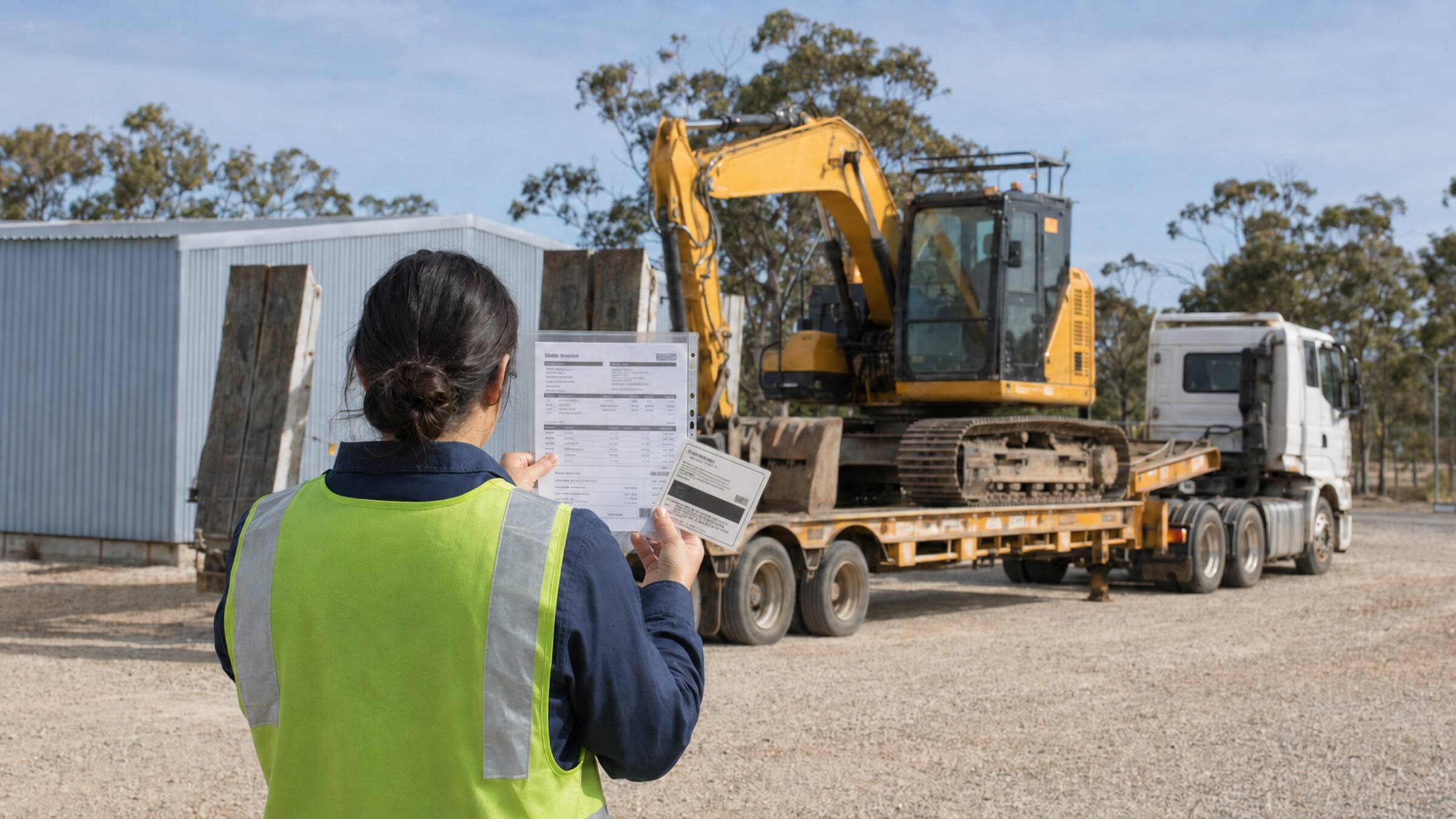

Two operators buy the same $100,000 excavator at two different auction houses on the same weekend. One pays $7,500 on top. The other pays $16,500. Neither did anything wrong. They just bid at houses with different buyer's premium rates, and only one of them checked before the sale.
A buyer's premium is a fee the auction house charges you on top of your winning bid, calculated as a percentage of the hammer price, with GST on top. On machinery it commonly runs from about 7.5 per cent to 16.5 per cent depending on the house, and many houses tier it so the percentage falls as the bid rises. Lenders generally fund the total payable on the auction invoice rather than the hammer price alone, so the premium needs to sit inside your pre-approval, not outside it.
The basics
What a Buyer's Premium Actually Is
It is the auction house's fee for running the sale, charged to the buyer rather than the seller, and it is not optional. When the hammer falls at $95,000, your invoice is not for $95,000.
Three things about it catch people out. It is calculated on the hammer price, so a higher bid increases it proportionally. GST applies to it, as it does to other charges and fees. And it is announced before the sale rather than negotiated afterwards, which means the only time to factor it in is while you are still deciding what to bid.
Under the Pickles auction terms, for example, the premium is payable as a percentage of the purchase price "as stipulated and announced by the Auctioneer prior to the commencement of the Auction Sale". That announcement is the number you need, and it is worth finding before you register rather than on the day.
The rates
What the Major Australian Houses Charge
Rates vary widely and change, so treat this as a guide to the range rather than a live price list. Always read the terms for the specific sale.
| Auction house | Buyer's premium on machinery | Notes |
|---|---|---|
| Ritchie Bros | 8.5% | All Australian lots, on site, online or proxy. Minimum $100 per lot, GST on top |
| Slattery | 7.5% | Trucks and machinery category. Other categories differ |
| Grays | 7.5% to 20% | Tiered by bid: 20% under $1,501, 16.5% from $1,501, 7.5% from $7,001 |
| Lloyds | 16.5% | Can vary by lot |
| Pickles | Announced per sale | Percentage of purchase price, stipulated before bidding opens |
On a $100,000 machine, the gap between the bottom and top of that range is about $9,000. That is not a rounding difference. It is a deposit, a float and a service, and it is decided entirely by which yard you happened to bid in.
The tiers
Why the Percentage Falls as the Price Rises
The tiering surprises most first-time buyers, because it works the opposite way to how fees usually behave.
The Grays structure is the clearest example: 20 per cent applies while bidding sits under $1,501, drops to 16.5 per cent from $1,501, and drops again to 7.5 per cent once bidding passes $7,001. The house has a fixed cost in cataloguing, storing and selling a lot, so on cheap items that cost has to be recovered as a much larger share of the price.
For machinery buyers this mostly works in your favour, since a serious plant or truck purchase sits well into the lowest tier. It matters far more if you are buying attachments, tooling or parts lots alongside the machine, where a $900 bucket can attract a fifth again on top.
Minimum fees work the same way. Ritchie Bros applies a minimum of $100 per lot, so a cheap lot can carry a premium worth more than the percentage would suggest.
Need the premium inside your approval?
Obligation-free. No commitment to proceed.
Tax
The GST Layer on Top
GST is added to charges and fees, the premium included. So a 8.5 per cent premium on a $95,000 hammer price is $8,075, and GST applies to that fee as well as to the machine where the sale is taxable.
If you are registered for GST and the purchase is for business use, the GST is generally claimable through your BAS in the normal way, subject to the usual ATO rules. That does not make it free, it makes it a timing issue: you fund it at settlement and recover it at your next return. Auction settlement windows are short, so the cash has to be there in the meantime whether or not you get it back later.
Your accountant is the right person to confirm the treatment for your structure before you rely on it.
Finance
Does Your Lender Fund the Premium?
This is the question that actually matters, and it is the one almost no auction guide answers.
Lenders generally fund the total payable on the auction invoice, not the hammer price on its own. The invoice is the document that gets assessed, and the premium is part of what you owe the auction house, so it usually forms part of the amount financed.
Two caveats worth raising with your broker before the sale rather than after. Lenders assess against the value of the asset, so a very high premium on a modest machine can push the total past what the lender considers the asset supports. And where a deposit is involved, it is generally calculated on the total rather than the hammer price.
The practical answer is to tell the lender the premium rate for the sale when you seek pre-approval, so the limit is set against the number you will actually be invoiced.
The arithmetic
How to Build It Into Your Pre-Approval
Work backwards from your approval, not forwards from your bid. The figures below are illustrative.
| Step | Figure | Why |
|---|---|---|
| Pre-approved limit | $120,000 | The ceiling on everything, not the bid ceiling |
| Reserve for transport and repairs | $8,000 | As is, where is, so this is yours |
| Available for the invoice | $112,000 | Hammer price plus premium |
| Divide by 1.085 for an 8.5% premium | $103,225 | Your true maximum bid |
| Round down for comfort | $103,000 | The number you take into the room |
The division is the step people skip. Taking 8.5 per cent off $112,000 gives $102,480, which is not the same as the bid that produces a $112,000 invoice. Dividing by 1.085 gives the correct answer. At a 16.5 per cent house, the same $112,000 supports a bid of only about $96,100, which is nearly $7,000 less machine for the same approval.
Our guide to getting pre-approved before you bid covers how the limit itself is set, and the comparison of auction, dealer and private sale puts the premium alongside the other costs that decide whether auction is genuinely cheaper.
Frequently Asked Questions
What is a buyer's premium at an auction?
A fee the auction house charges the buyer on top of the winning bid, calculated as a percentage of the hammer price, with GST added. It is announced before bidding opens and is not negotiable. On Australian machinery sales it commonly runs from about 7.5 per cent to 16.5 per cent depending on the house.
How much is the buyer's premium in Australia?
It depends on the house and often on the bid. Ritchie Bros applies 8.5 per cent to Australian lots with a $100 minimum. Slattery lists 7.5 per cent for trucks and machinery. Grays tiers it from 20 per cent under $1,501 down to 7.5 per cent above $7,001. Lloyds has been listed at 16.5 per cent. Always check the terms for the specific sale, since rates change.
Is GST charged on the buyer's premium?
Yes. Auction terms generally provide that GST is added to all charges and fees payable, which includes the premium. If you are registered for GST and buying for business use, it is generally claimable in the normal way subject to ATO rules, but you still have to fund it at settlement.
Will my lender finance the buyer's premium?
Generally yes, because lenders fund the total payable on the auction invoice rather than the hammer price alone. Two things to raise upfront: a high premium on a modest machine can push the total past what the lender considers the asset supports, and any deposit is usually calculated on the total rather than the hammer price. Tell your broker the premium rate when you seek pre-approval.
Why is the premium percentage higher on cheaper lots?
Because the auction house has a largely fixed cost in cataloguing, storing and selling each lot regardless of value. Tiered structures recover that cost as a larger share of a small sale. It matters most when you are buying attachments, tooling or parts lots alongside a machine, where a small purchase can attract a much higher rate plus any minimum fee.
How do I work out my maximum bid with the premium included?
Divide, do not subtract. Take your approval, set aside what you need for transport and repairs, then divide the remainder by one plus the premium rate. With $112,000 available and an 8.5 per cent premium, divide by 1.085 to get about $103,225 as your true maximum bid. Subtracting 8.5 per cent instead gives the wrong answer.
Can the buyer's premium be negotiated?
No. It is set by the auction house and announced before bidding opens, and it applies to every buyer in the room on the same terms. The only lever you control is which sale you bid at, which is why the rate is worth checking before you register.
Does the premium apply if I buy online rather than on site?
Yes. Ritchie Bros, for instance, applies its transaction fee to all lots whether purchased on site, online or by proxy bid. Bidding remotely does not avoid the fee, and online sales sometimes carry additional platform charges, so read the fee schedule for the specific sale.
How Equifund Can Help
Of every cost attached to an auction purchase, the premium is the only one you can know exactly before you raise your hand. The rate is published, the arithmetic is fixed, and it still ends up outside more bidding plans than any other line. Equifund is a commercial finance broker with a wide panel of specialist lenders, and on auction files our first job is making the approval match the invoice rather than the bid.
- Approved against the invoice: the limit is set on the total payable, premium and fees included, because that is the document the lender ultimately funds
- The right rate, not a rule of thumb: tell us which house you are bidding at and we use its actual published rate, since the difference between 7.5 and 16.5 per cent is roughly $9,000 on a $100,000 machine
- The division done properly: we work your bid ceiling back from the approval rather than subtracting a percentage, which is the error that puts people over
- Small lots counted too: tiered rates and per-lot minimums bite hardest on the attachments and tooling bought alongside the machine
- Eligibility: an established ABN and a genuine business purpose, with final eligibility subject to lender assessment
Know the rate before you set the ceiling, and the premium stops being a surprise on the invoice. See how auction finance works, or send us the sale and we will do the arithmetic with you. Pre-approval and quotes are obligation-free; a brokerage fee applies on settlement and is disclosed in writing before you sign.
Sources: Pickles Auction Terms and Conditions · Lloyds Auctions on buyer's premium · Australian Taxation Office · published Ritchie Bros, Grays and Slattery buyer fee schedules. Premium rates change and vary by sale, category and lot. The rates shown were current at the time of writing and must be checked against the terms for the specific auction before bidding. Worked figures are illustrative.
Disclaimer: This article is general information only and does not constitute financial, tax or legal advice. It does not take into account your personal circumstances, objectives or needs. Equifund Financial Group is a commercial finance broker, not a registered tax agent or licensed financial adviser. Tax treatment depends on individual circumstances and current ATO rules. Confirm with your accountant before relying on any tax position. All finance is subject to lender credit assessment, terms and conditions. Rates, lead times and product availability are indicative and current at time of writing, and may change. Market figures, sales data and forecasts cited reflect publicly available data at the time of publication.