
Pre-approval tells you what your business can borrow. It does not tell you whether the lender will fund that particular lot. Those are two different questions, and at auction the second one only gets answered after you have already committed to buying the machine. Here is what a lender actually looks at when the lot lands on their desk.
A lender assesses four things about an auction lot: its age measured from year of manufacture, whether it can be positively identified by serial number or VIN, whether the Personal Property Securities Register is clear so the lender can take first position, and whether the asset type is one they fund at all. As-is condition does not by itself stop finance. A missing compliance plate, a mismatched VIN or an undischarged security interest usually does.
The checklist
The Four Things a Lender Checks on a Lot
When you win a lot, the file stops being about you and starts being about the machine. Lenders look at the invoice, the serial number, the age, the condition, the make and model, any service history, insurance and where the asset will live.
Four of those decide the outcome. Age, because it sets the maximum term. Identification, because a lender cannot register security over a machine it cannot uniquely name. The PPSR position, because an existing interest blocks the lender from taking first ranking. And asset type, because some categories sit outside a lender's appetite entirely.
Everything else shapes the rate and the deposit. Those four decide whether there is a deal.
Age
Age Is Measured From Manufacture, Not Compliance
This catches people out more than any other technicality. Lenders reference the year of manufacture rather than the compliance date when assessing eligibility.
A machine built in 2014 and complied in 2016 is assessed as a 2014 asset, not a 2016 one. On a five year term, that is the difference between a machine that is fifteen years old at the end of the loan and one that is thirteen. If the lender caps at fourteen, those two years decide the deal.
At auction this matters more than in a dealer yard, because catalogue descriptions are written by the consignor and sometimes quote whichever year flatters the lot. Check the data plate rather than the listing.
Age also sets the term available, which sets the repayment, which is what your serviceability was assessed against. An older machine can therefore be affordable on paper and unaffordable in practice, because the term shortens. Our guide to lender age caps on used assets covers where those limits sit by lender type.
Identification
Identification Is Where Auction Lots Fail
A lender takes security over a specific machine, which means it has to be able to name that machine unambiguously. Serial numbers, make, model and a full description are required at settlement, and for vehicles and heavy machinery the VIN on the compliance plate has to match the asset's actual VIN.
Three things go wrong at auction more often than anywhere else.
- The plate is missing or unreadable. Machines that have worked hard, been repainted or spent time in a wash bay lose plates. Without one, identification becomes a problem before the credit assessment even starts.
- The numbers do not match. A discrepancy between the plate and the machine raises questions that take time you do not have inside a settlement window.
- Modification plates are missing. On assets that have been rebuilt or modified, an absent or incorrectly issued modification plate is a red flag, particularly on higher-value reconditioned trucks and machinery.
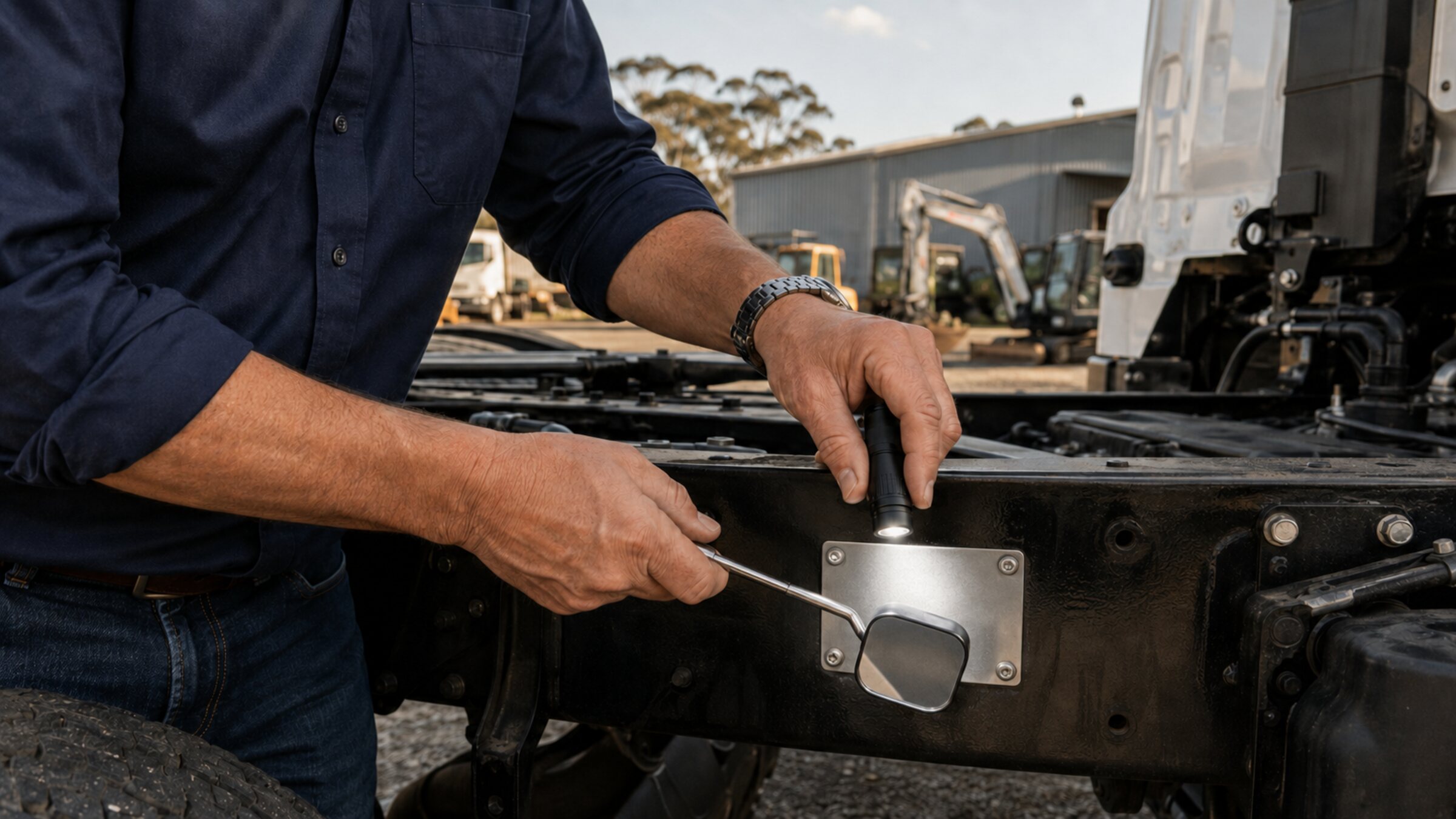
Photograph the data plate during the inspection days. It takes ten seconds and it is the single most useful thing you can send a broker before a sale.
Not sure a lot will be funded?
Obligation-free. No commitment to proceed.
Encumbrances
Why the PPSR Search Decides the Deal
If a machine already has an active security interest registered against it, your lender cannot take first position, and the finance generally does not proceed. That is the whole reason the search matters, and it is why auction terms make it the buyer's responsibility rather than the auctioneer's.
The register is not a niche tool. Australian Financial Security Authority figures show more than 3.3 million PPSR searches in the March quarter of 2026, up 7 per cent year on year, against more than 10.6 million current registrations. Motor vehicles are the largest collateral class at over 5.1 million registrations, and searches by serial number make up nearly 58 per cent of all searches performed.
In other words, a very large number of Australian machines have somebody's interest attached to them, and the market checks constantly. At auction the risk concentrates, because you are often buying from a vendor you will never meet, whose finance arrangements you know nothing about.
Run the search before you bid, not after you win. A clear result is also something your broker can put in front of a lender immediately.
Condition
As Is Does Not Mean Unfundable
Plenty of buyers assume that because auction lots sell as is, where is, lenders treat them as damaged goods. They do not. As-is is the normal condition of sale at auction and lenders fund auction purchases routinely.
What condition changes is the deposit and the term rather than the answer. An older or higher-hour machine attracts a shorter term and a larger deposit, and some lenders will want a pre-purchase inspection from a qualified mechanic before settlement on older assets.
The distinction worth holding onto: lenders price condition, they do not usually refuse it. What they refuse is uncertainty about identity, encumbrance or asset type.
The vendor
Who Consigned the Lot
The same machine can present differently depending on who put it in the sale.
A dealer or a fleet consignment usually arrives with service history, clean identification and a paper trail. A private vendor dispersal may arrive with none of that, and the lender's questions multiply accordingly.
It is a fair question to ask the auction house before the sale, and it also matters for your legal position, since a dealer selling through an auction generally carries different obligations to a private vendor selling through one. Our comparison of auction, dealer and private sale covers that distinction.
The hard ones
Assets That Are Genuinely Hard to Fund
Some lots are difficult regardless of your position as a borrower.
- Machines with no identification, where the plate is gone and the serial cannot be established
- Heavily modified or rebuilt assets without the paperwork to support the modifications
- Very old assets that exceed the age cap at the end of any workable term
- Niche or single-purpose equipment with a thin resale market, since the lender is holding it as security
- Assets with an unresolved PPSR interest that the vendor cannot or will not discharge
- Damaged or incomplete lots sold for parts rather than for work
None of these are absolute. Specialist lenders have more appetite than the majors, and a strong trading position and a larger deposit move the needle. But they are the lots where the answer should be confirmed before you bid rather than assumed.
Before you bid
Checking a Lot Before the Sale
The whole problem is solvable in about ten minutes per lot, on the inspection day rather than on settlement day.
- Photograph the data plate and note the year of manufacture, not the compliance year
- Record the serial or VIN and check it matches the plate and the catalogue
- Run the PPSR search against the serial
- Note the hours or kilometres and work out the age at the end of the term you want
- Ask who consigned it, dealer, fleet or private vendor
- Send all of it to your broker before the sale, with the lot number
A lot that passes those six checks is usually straightforward. One that fails on identification or PPSR is worth walking away from, however good the price looks, because at auction there is no walking away after the hammer.
Frequently Asked Questions
Will a lender fund a machine sold as is, where is?
Usually yes. As-is is the normal condition of sale at auction and lenders fund auction purchases routinely. Condition affects the deposit and the term rather than the answer, and older assets may require a pre-purchase inspection before settlement. What stops a deal is uncertainty about identification, encumbrance or asset type.
Is asset age measured from build date or compliance date?
Lenders reference the year of manufacture, not the compliance date. A machine built in 2014 and complied in 2016 is assessed as a 2014 asset. That two year gap can be the difference between passing and failing an age cap at the end of the loan term, so check the data plate rather than the catalogue description.
What happens if a machine has a PPSR interest registered against it?
Your lender cannot take first position over the asset, and the finance generally cannot proceed until the existing interest is discharged. Auction terms make the search the buyer's responsibility, so run it against the serial number before you bid rather than discovering the problem inside a settlement window.
Can you finance a machine with no compliance plate?
It is difficult. A lender takes security over a specific asset and needs to identify it unambiguously by serial number or VIN, with the plate matching the machine. A missing or unreadable plate, or a mismatch between plate and asset, creates problems before credit assessment begins. Establishing identification another way is sometimes possible but takes time an auction settlement window rarely allows.
Does it matter whether a dealer or a private vendor consigned the lot?
Yes, on two fronts. A dealer or fleet consignment usually comes with service history and clean identification, which makes a straightforward file. It also changes your legal position, since a dealer selling through an auction generally carries different obligations to a private vendor. It is a fair question to ask the auction house before bidding.
What machinery is hardest to finance at auction?
Machines with no usable identification, heavily modified assets without supporting paperwork, very old assets that breach the age cap at end of term, niche equipment with a thin resale market, anything carrying an unresolved PPSR interest, and lots sold for parts rather than for work. Specialist lenders have more appetite than the majors, but these are the lots to confirm before bidding.
Can I check whether a lot is fundable before the auction?
Yes, and it takes about ten minutes per lot on the inspection day. Photograph the data plate, record the serial or VIN, run a PPSR search, note the hours, ask who consigned it, and send the lot number and details to your broker before the sale. That is enough for a lender to give you a view in advance.
Does a shorter loan term change what I can afford to bid?
Yes. Age caps limit the term available, and a shorter term raises the repayment on the same amount borrowed. An older machine can look affordable on the purchase price and fail on serviceability once the term shortens, which is why age is worth checking before the sale rather than after.
How Equifund Can Help
Everything above is answerable in advance, and almost nobody asks in advance. Equifund is a commercial finance broker with a wide panel of specialist lenders, and on auction files the useful work happens on the inspection day: you send us the lot, we tell you where it sits before the auctioneer starts.
- Send us the lot number: with the data plate photo and the hours, we will tell you where the year of manufacture puts it against a workable term
- Specialist appetite where the majors stop: older assets and unusual equipment need lenders who write that business, not a bank that declines it on policy
- Identification checked early: the plate and serial questions get raised on inspection day rather than inside a settlement window
- Eligibility: an established ABN and a genuine business purpose, with final eligibility subject to lender assessment
Bidding on a lot you have not had checked is the expensive version of this. See how auction finance works, or send the lot through before the sale. Pre-approval and quotes are obligation-free; a brokerage fee applies on settlement and is disclosed in writing before you sign.
Sources: Australian Financial Security Authority, PPSR statistics · Personal Property Securities Register · Pickles Auction Terms and Conditions. Lender age caps, deposit requirements and asset appetite vary between lenders and change over time. Figures are current at the time of writing and may change.
Disclaimer: This article is general information only and does not constitute financial, tax or legal advice. It does not take into account your personal circumstances, objectives or needs. Equifund Financial Group is a commercial finance broker, not a registered tax agent or licensed financial adviser. Tax treatment depends on individual circumstances and current ATO rules. Confirm with your accountant before relying on any tax position. All finance is subject to lender credit assessment, terms and conditions. Rates, lead times and product availability are indicative and current at time of writing, and may change. Market figures, sales data and forecasts cited reflect publicly available data at the time of publication.